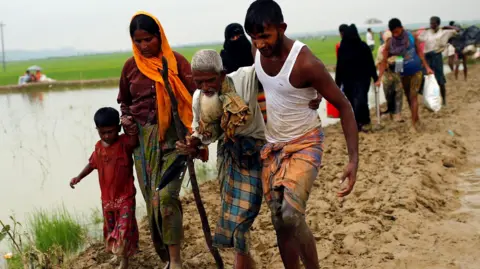
Myanmar has denied committing genocide against the Rohingya people, asserting that The Gambia has failed to supply sufficient evidence as it began its defense at the United Nations' top court. Ko Ko Hlaing, representing Myanmar, informed judges at the International Court of Justice (ICJ) that the accusation is 'unsubstantiated'. Earlier in the hearings, The Gambia's foreign minister, Dawda Jallow, asserted that Myanmar aimed to erase the minority Muslim population through 'genocidal policies'. Since an army crackdown in 2017, which sparked mass violence, thousands of Rohingya were killed and more than 700,000 fled to neighboring Bangladesh. A United Nations report released the following year urged investigations into top military officials for genocide and crimes against humanity occurring in Rakhine state. Myanmar, which has been under military control since a coup in 2021, rejected the findings, indicating its military operations only targeted insurgents. Hlaing emphasized that it was not possible for Myanmar to remain passive in the face of terrorism, leading to the military's 'clearance operations' in northern Rakhine state. The case has broader implications as the court prepares to hear witness testimonies, including from Rohingya survivors, with a ruling expected by late 2026. This case could set precedence for other genocide discussions, especially in light of the longstanding UN definition of genocide.
Myanmar's Defense Begins in Historic Genocide Case at UN Court
Myanmar's Defense Begins in Historic Genocide Case at UN Court
Myanmar has launched its defense against allegations of genocide towards the Rohingya people at the International Court of Justice (ICJ), rejecting claims made by The Gambia about its treatment of the Muslim minority.
Myanmar is currently defending itself at the International Court of Justice (ICJ) against allegations of genocide made by The Gambia regarding its treatment of the Rohingya people. The country insists the accusations lack solid evidence and asserts that military operations were necessary to confront insurgent threats. The court proceedings are significant, with a verdict expected by the end of 2026.