In brief
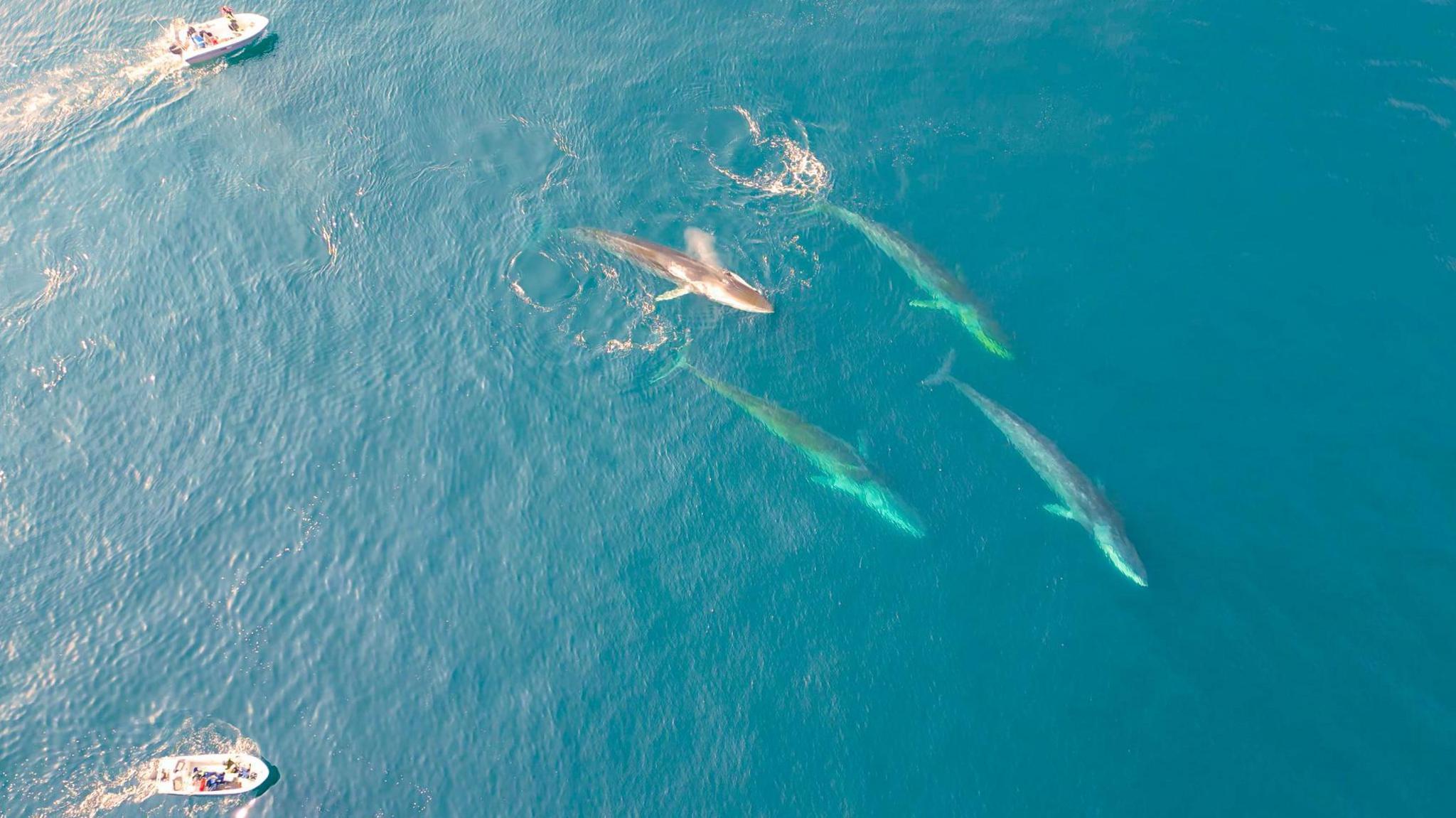
For the first time, huge whales such as humpbacks, fin and minke species are appearing in East Greenland’s coast, a change linked to rapid ice loss. A decade‑long survey combined ship, aerial, satellite and hunter data to show an influx of up to 4,000 humpbacks, 6,000 fin and 6,000 minke whales summer feeding this year. The shift signals a major ecological regime change, offering whale food but risking displacement of native Arctic mammals like narwhals and belugas. Scientists warn that while some strains thrive, others could lose habitat as the climate transforms the marine environment.
When ice once kept giant whales on the outskirts of the Arctic, warm summer seas have drawn them back into East Greenland’s waters. A multi‑year European study, combining vessel surveys, aerial footage, satellite tracking, and Inuit hunter interviews, charts an unprecedented bloom of baleen whales around the coast.
Historically, no humpback, fin or minke whales were seen by ship crews before 2006. Last year’s data recorded 150 sightings from vessels alone, while aerial surveys in 2015 and 2024 documented 4,000 humpbacks, 6,000 fin and 6,000 minke whales feeding in the area.
“It’s a major ecological regime shift,” says lead researcher Prof. Mads Peter Heide‑Jørgensen of Greenland Institute of Natural Resources. The shift stems from rising sea temperatures and altered prey distribution, allowing whales to exploit fish that have migrated into warmer waters.
The study estimates that these three species consume over 800,000 tonnes of fish and krill during each summer feeding season—a freight‑train for the Arctic food web.
While baleen whales seem to thrive, other Arctic species face new pressures. Narwhals and belugas, for instance, may be pushed inland or outcompeted as whales encroach on shared habitat.
Researchers highlight the duality of the change—“For some species, climate change opens up new opportunities, yet others lose their habitat.” The findings were published in the journal Frontiers in Marine Science.
Images: