In brief
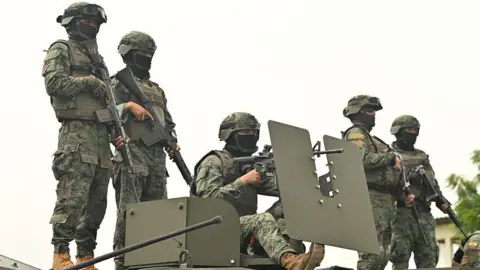
The Ecuadorian government has mobilized more than 75,000 soldiers and police across four provinces amid escalating drug-related violence. Interior Minister John Reimberg announced a nighttime curfew and highlighted President Daniel Noboa's efforts to quell a record murder rate. Ecuador's strategic location between drug-producing nations underscores its challenges with substance trafficking.
The Ecuadorean government has deployed more than 75,000 police officers and soldiers to four of the country's most violence-wracked provinces, as announced by the interior minister.The move includes declaring a night-time curfew in these areas as a part of what officials describe as a new phase in their ongoing war against criminal gangs.Since taking office in November 2023, President Daniel Noboa has struggled to curb drug-related violence, leading to a record murder rate in 2025. To combat this trend, Noboa's administration has aligned with a U.S.-led alliance comprising 17 countries focused on tackling criminal cartels in the Western Hemisphere.Ecuador has become a critical transit country for cocaine, with around 70% of the substance produced in Colombia and Peru estimated to pass through it. As part of efforts to combat narcotics, Noboa holds a strong stance, urging citizens: We're at war, while instructing them to remain indoors for safety.To strengthen collaborations against drug trafficking, the FBI recently opened its first office in Ecuador, paving the way for joint counter-narcotic operations. The nation's strategic position, combined with military support, aims to disrupt the flow of illicit drugs and restore safety to its communities.