In brief
European Union leaders express outrage as Hungary's Prime Minister Viktor Orbán vetoes a €90 billion loan for Ukraine, citing issues related to Russian oil supply. The veto, labeled as a gross act of disloyalty and blackmail by various leaders, raises concerns over Orbán's close ties to Russia and the implications for EU cohesion. Orbán's actions come ahead of crucial elections in Hungary, where he is under pressure to show a strong stance against Ukraine.
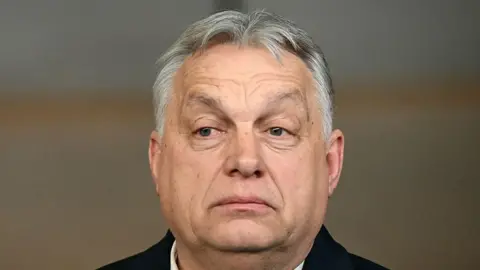
European Union leaders have accused Hungary's Prime Minister Viktor Orbán of disloyalty and blackmail after he blocked a €90bn (£77bn) loan for Ukraine.
No oil = no money, Orbán stated on X after Thursday's Brussels summit where he refused to lift his veto, citing a feud over a damaged pipeline that transports Russian oil to Hungary.
German Chancellor Friedrich Merz remarked that Orbán's actions amounted to a gross act of disloyalty, while European Council head António Costa described them as tantamount to blackmail.
Since the onset of the full-scale Russian invasion of Ukraine in 2022, Orbán has maintained close ties with Russia and has made hostility towards Ukraine a key election issue, as elections approach on April 12.
Hungary relies heavily on Russian energy, and Orbán has accused Ukraine of disrupting these supplies by failing to repair a Soviet-era pipeline known as Druzhba, which carries Russian oil through Ukraine to Hungary.
Kyiv asserts that the pipeline was damaged in January due to Russian airstrikes and that repairs will take weeks, with the condition that restoring the flow of oil would require lifting sanctions on Moscow.
While the pipeline remains inactive, Orbán has blocked EU funds for Ukraine, despite previously approving the decision at an earlier meeting. EU leaders met late into Thursday night, expressing thinly-veiled fury at Orbán's actions.
Colleagues who have been members of the European Council far longer than I have were deeply angered by what happened today, Merz shared with reporters post-meeting.
French President Emmanuel Macron characterized the meeting's outcome as unprecedented, stressing the need for the loan's immediate release. Costa joined in the discontent, calling Hungary’s actions completely unacceptable.
Orbán insisted on his stance following the meeting, proclaiming the right to refuse aid to Ukraine as long as President Zelensky did not lift the oil blockade. He, along with Slovakia's Prime Minister Robert Fico, rejected the summit's conclusions aimed at releasing the funds, which require unanimous support.
European Commission President Ursula von der Leyen affirmed that the loan would be delivered one way or the other and emphasized the urgency of implementing the plan with no Plan B.
Before the summit, Ukraine's Zelensky had urged EU leaders to release the funds crucial for financial security, highlighting, For the third month now, the most important financial security guarantee for Ukraine from Europe is not working. This is critical for us as it serves as a resource to protect lives.
Orbán has consistently postponed EU aid for Ukraine and sanctions against Russia as he faces an electoral challenge, with polls indicating his party is trailing behind its main competitors.