In brief
Australia's recent trade deal with the European Union aims to enhance agricultural exports, particularly beef, by eliminating most tariffs on Australian goods. While hailed as a 'win-win' for both parties, some sectors, like Australian meat producers, express concerns over insufficient quotas. The deal also facilitates greater European imports into Australia and solidifies a unique partnership between the regions.
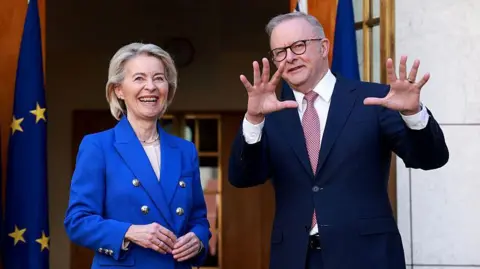
More Australian beef will be served on dining tables across Europe under a new free trade deal with the European Union that substantially reduces export tariffs on Australian agricultural products. This significant agreement, valued at approximately A$10 billion (approximately $7 billion, £5.2 billion), was finalized recently, with Australia's Prime Minister Anthony Albanese and European Commission President Ursula von der Leyen declaring it a mutual 'win-win'.The trade deal facilitates the export of a variety of Australian products, including wine, seafood, and dairy while also allowing Italian-style sparkling wine made in Australia to be marketed domestically as prosecco. However, the use of this name will be gradually phased out for exports over the next decade. Australian cheese producers will still be permitted to use names like parmesan, although some products like feta are subject to a more complex transition due to strict EU naming regulations.Almost all EU tariffs on Australian agricultural exports will be lifted, potentially saving local wine producers about A$37 million. Additionally, Australian consumers can expect lower prices on European imports such as wines, spirits, and gourmet foods as a result of the deal.The agreement reflects a deep-rooted sensitivity surrounding food naming rights, particularly since Australia is now the only non-Italian country authorized to use the term prosecco. Prime Minister Albanese acknowledged the heritage of migration that has shaped Australia's culinary landscape, linking it to its European ties.The deal has raised concerns among some Australian meat producers, notably Meat and Livestock Australia representatives, who argue that the quota for beef exports—set at 30,000 tonnes—falls short of their demand for at least 50,000 tonnes.Beyond trade, Australia and the EU also established a security and defence partnership aimed at enhanced cooperation across various sectors including counter-terrorism and maritime security. European Commission President von der Leyen emphasized the importance of this collaboration in a rapidly changing global landscape, where economic partnerships are pivotal for collective resilience.