In brief
An international research team announced that a 115‑million‑year‑old dinosaur bone from northeastern Brazil contains mineralized red blood cells and intact heme molecules—the oldest confirmed evidence of ancient blood. The discovery, published in the Proceedings of the National Academy of Sciences, may open new research avenues into blood evolution and biomolecule preservation. It also challenges the assumption that hemoglobin could not survive that long.
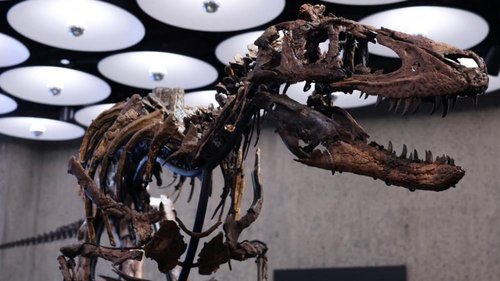
A joint effort by scientists from Australia, Japan, Brazil and the United States announced that the earliest definitive fossilized blood has been found in a theropod dinosaur that lived 115 million years ago, according to a statement released Tuesday by Xinhua and Curtin University.
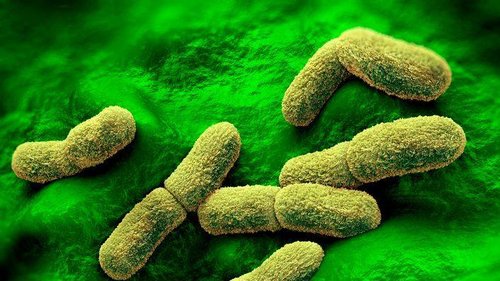
The team reported that the limb bone, recovered in northeastern Brazil, contains numerous mineralized red blood cells trapped within the fossil’s vascular canals. Chemical analysis confirmed the presence of heme‑derived molecules and collagen amino acids, marking the first time hemoglobin‑related compounds have been chemically proven in a fossil of this age.
Lead author Kliti Grice, a professor at Curtin University, explained that the cells were coated with the mineral hausmannite, which may have shielded the cellular structure and its associated biomolecules from degradation during the dinosaur’s rapid burial in a low‑oxygen, microbially rich environment.
The findings were published in the journal Proceedings of the National Academy of Sciences, opening fresh possibilities for studying ancient blood evolution, metabolic rates, and activity levels in extinct animals.
“The findings challenged longstanding assumptions that biomolecules such as hemoglobin could not survive deep time,”
Lead author Kliti Grice, a distinguished professor at Curtin University, said the findings challenged longstanding assumptions that biomolecules such as hemoglobin could not survive deep time.
The discovery stands out as the first unequivocal evidence of fossilized red blood cells and collagen preserved for this long and could have implications for the search for extraterrestrial life and the role of biomolecules in ancient environments.