In brief
In 2026 a forgotten fossil discovered in 1985 was finally identified as a Titanosaur tail bone, making it the first dinosaur fossil found on Antarctica. Stored in a Cambridge drawer, the specimen was only recognised after palaeontologists examined its distinctive vertebral shape. The find gives insight into a once lush, forest‑covered continent that existed 82 million years ago. Studies estimate the Antarctic dinosaur measured roughly 23 feet (7 m) long, smaller than most Titanosaurs. The discovery highlights how even subtle finds can reshape our understanding of Antarctic prehistory.
For four decades a little piece of fossilised bone sat in the dusty drawer of the British Antarctic Survey (BAS) collection in Cambridge, its true nature a mystery.
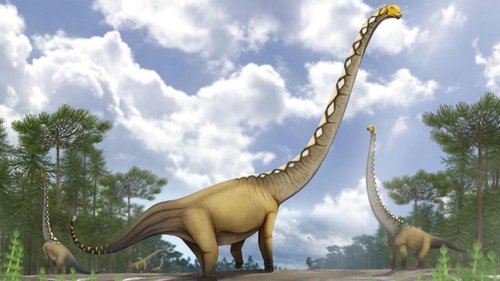
Scrutinised in 1985 by a BAS field team on James Ross Island, the bone was mislabelled as “vertebra of large reptile” in a field notebook. Only in 2024 did palaeontologists recognise its distinctive ball‑and‑socket joints as characteristic of a Titanosaur – the gigantic, plant‑eating dinosaurs that once roamed the planet.
The verest bone, now formally documented, is the first dinosaur fossil proven recovered on Antarctica. A 10‑centimetre crusted tail vertebra, paired with the work of Prof Paul Barrett from the Natural History Museum, confirms the specimen as a juvenile or smaller type of Titanosaur.
Scientists estimate the Antarctic Titanosaur measured about 7 metres (23 feet) long, giving new clues about the size range of these giants. The continental environment of the Late Cretaceous was a green, forested world, contrasting sharply with today’s icy expanse.
“This find shows that an area we now consider uninhabitable once supported a diverse ecosystem,” said Barrett. The bone adds a missing piece to the puzzle of how dinosaurs survived in the southernmost regions of Earth 82 million years ago.
Learn more in the peer‑reviewed paper published in Acta Palaeontologica Polonica.