
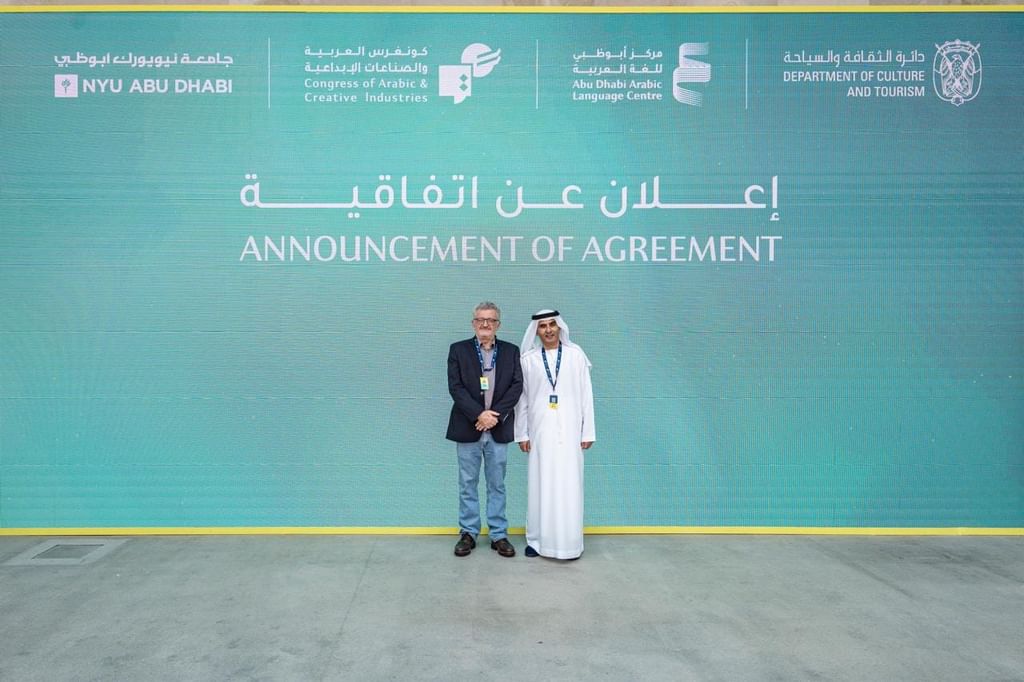
The Abu Dhabi Arabic Language Centre (ALC), in partnership with New York University Abu Dhabi, MBZUAI and Zayed University, has launched the second edition of the Balanced Arabic Readability Evaluation Corpus (BAREC 2.0). According to WAM, the launch coincides with the project’s use of AI tools that can rewrite Arabic texts to various readability levels and give detailed feedback on classification.
In a statement released by the ALC, the project builds on the more than 69,000 sentences developed in BAREC 1.0 and introduces advanced models that allow authors to adjust vocabulary and structure to match specific proficiency levels. The goal is to assist writers in producing material for diverse audiences and educators in creating resources suited to learners at different stages.
WAM reported that Dr. Ali bin Tamim, Chairman of the ALC, said, “BAREC 2.0 is an important step forward in our efforts to advance Arabic readability research and harness modern technologies to support education and content creation.”
“By combining linguistic expertise with advanced AI models, we are working to develop practical tools that help educators, writers and students assess and adapt Arabic texts to different readability levels. This will enhance comprehension, support the creation of Arabic content that is better suited to different readers, and contribute to strengthening the effective use of the Arabic language in the digital environment.”
Prof. Fabio Piano, Vice Chancellor of NYU Abu Dhabi, added that the partnership is intended to strengthen Arabic language education within the UAE.
Both the WAM article and a brief mention on the Simply Abu Dhabi website confirm the launch of the BAREC 2.0 project, highlighting its focus on AI‑driven text adaptation for varied reading proficiency levels.
