The quiet of a Kyiv cemetery is broken by a trumpet salute, then a burst of rifle fire. Soldiers stretch a Ukrainian flag over a shiny wooden coffin and stand silently alongside in the sparkling white snow. A woman cries, her face crumpling.
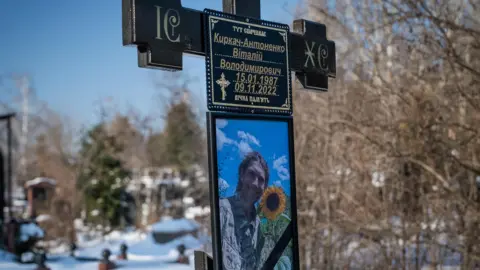
Natalia is burying her husband for the second time. Vitaly was killed three years ago fighting in the eastern Donbas and his first grave was in their home town of Slovyansk. But Russian forces have advanced since then and the area is increasingly under attack. So Natalia had her husband's grave exhumed and Vitaly's remains moved hundreds of miles to Ukraine's capital.
When we buried him in Slovyansk, land was being liberated and we thought the war would soon end, Natalia explains, after the reburial ceremony conducted with military honors. But the frontline is constantly moving closer and I was scared Vitaly might end up under occupation.
Vitaly was a ceramics artist who volunteered to defend his country in the early days of Russia's full-scale invasion in 2022. He didn't want to, but he had to do it. He was a patriot, Natalia explains, through tears. She was pregnant when her husband was killed and he never got to meet their daughter.
The decision to move Vitaly's body from the land where he was born and fought was extremely painful. It was very hard, emotionally. But it was the right decision, she said. It would have been far harder to leave him, to know that he had stayed.
Natalia has "no doubt" her husband would have wanted the army to fight on, not concede now. She fears that by allowing territorial losses, the conflict could escalate further.
As the U.S. seeks to broker peace, the pressure is mounting on Ukraine, complicating the unfolding drama of war and loss that families like Natalia's are enduring across Ukraine.
Natalia is burying her husband for the second time. Vitaly was killed three years ago fighting in the eastern Donbas and his first grave was in their home town of Slovyansk. But Russian forces have advanced since then and the area is increasingly under attack. So Natalia had her husband's grave exhumed and Vitaly's remains moved hundreds of miles to Ukraine's capital.
When we buried him in Slovyansk, land was being liberated and we thought the war would soon end, Natalia explains, after the reburial ceremony conducted with military honors. But the frontline is constantly moving closer and I was scared Vitaly might end up under occupation.
Vitaly was a ceramics artist who volunteered to defend his country in the early days of Russia's full-scale invasion in 2022. He didn't want to, but he had to do it. He was a patriot, Natalia explains, through tears. She was pregnant when her husband was killed and he never got to meet their daughter.
The decision to move Vitaly's body from the land where he was born and fought was extremely painful. It was very hard, emotionally. But it was the right decision, she said. It would have been far harder to leave him, to know that he had stayed.
Natalia has "no doubt" her husband would have wanted the army to fight on, not concede now. She fears that by allowing territorial losses, the conflict could escalate further.
As the U.S. seeks to broker peace, the pressure is mounting on Ukraine, complicating the unfolding drama of war and loss that families like Natalia's are enduring across Ukraine.