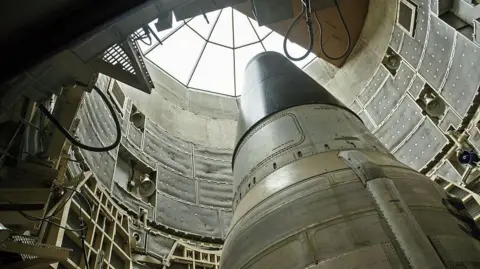
The last nuclear weapons control treaty between the US and Russia is due to expire on Thursday, raising fears of a new arms race. The Strategic Arms Reduction Treaty, known as 'New START' and signed in 2010, was one of a handful of agreements designed to help prevent a catastrophic nuclear war. The treaty capped the number of deployed strategic nuclear warheads for each party to 1,550. It also established some transparency including data transfer, notifications and on-site inspections. The treaty's expiry effectively marks an end to the arms control co-operation between Washington and Moscow that helped bring an end to the Cold War.
On Wednesday, Pope Leo urged the US and Russia to renew the treaty, saying the current world situation required 'calls for doing everything possible to avert a new arms race'.
The original START treaty - signed in 1991 by the US and the Soviet Union - barred each of the two signatories from deploying more than 6,000 nuclear warheads. It was succeeded by New START signed in 2010 in Prague by the US and Russia, the successor state to the dissolved Soviet Union.
Although Russia suspended the treaty three years ago as tensions grew over the Ukraine war, both countries were still thought to be abiding by the treaty. The agreement provided a framework for preventing an uncontrolled build-up of nuclear weapons and offered transparency measures to avoid misjudging each other's intentions.
Its expiry follows a worrying pattern, as other long-standing arms control treaties have already fallen by the wayside, including the Intermediate-Range Nuclear Forces Agreement and the Open Skies Treaty. Britain's former head of armed forces, Admiral Sir Tony Radakin, warned that the architecture that kept the world safe now risks unraveling.
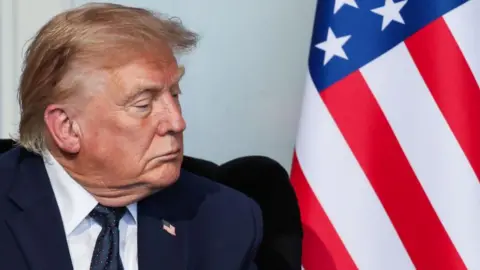
Russia's Dmitry Medvedev, who signed the New START treaty in 2010, said its expiration should 'alarm everyone', while a senior adviser to President Putin stated intentions to act responsibly if the treaty expired. Conversely, US President Trump seemed unfazed, suggesting a better agreement could be made if the treaty expired.
Washington believes that any future arms control treaty should also include China, which has been expanding its nuclear capabilities, while Russia insists that France and the UK must be part of future negotiations.
As both nations continue to modernize their nuclear forces, experts express that an arms race is already underway, complicating future arms control negotiations. Darya Dolzikova from RUSI highlighted escalating military capabilities as an obstacle to disarmament efforts amid a resurgence in countries seeking nuclear deterrents, with no rush on either side to finalize a new treaty. The expiration of New START signals a more volatile and dangerous era in arms control.
On Wednesday, Pope Leo urged the US and Russia to renew the treaty, saying the current world situation required 'calls for doing everything possible to avert a new arms race'.
The original START treaty - signed in 1991 by the US and the Soviet Union - barred each of the two signatories from deploying more than 6,000 nuclear warheads. It was succeeded by New START signed in 2010 in Prague by the US and Russia, the successor state to the dissolved Soviet Union.
Although Russia suspended the treaty three years ago as tensions grew over the Ukraine war, both countries were still thought to be abiding by the treaty. The agreement provided a framework for preventing an uncontrolled build-up of nuclear weapons and offered transparency measures to avoid misjudging each other's intentions.
Its expiry follows a worrying pattern, as other long-standing arms control treaties have already fallen by the wayside, including the Intermediate-Range Nuclear Forces Agreement and the Open Skies Treaty. Britain's former head of armed forces, Admiral Sir Tony Radakin, warned that the architecture that kept the world safe now risks unraveling.
Russia's Dmitry Medvedev, who signed the New START treaty in 2010, said its expiration should 'alarm everyone', while a senior adviser to President Putin stated intentions to act responsibly if the treaty expired. Conversely, US President Trump seemed unfazed, suggesting a better agreement could be made if the treaty expired.
Washington believes that any future arms control treaty should also include China, which has been expanding its nuclear capabilities, while Russia insists that France and the UK must be part of future negotiations.
As both nations continue to modernize their nuclear forces, experts express that an arms race is already underway, complicating future arms control negotiations. Darya Dolzikova from RUSI highlighted escalating military capabilities as an obstacle to disarmament efforts amid a resurgence in countries seeking nuclear deterrents, with no rush on either side to finalize a new treaty. The expiration of New START signals a more volatile and dangerous era in arms control.