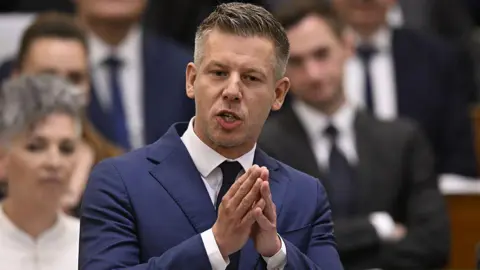
All they stand for is anger, hatred, and destruction, declared Viktor Orban during a rally in Györ, expressing frustration toward the opposition protesters. Following 16 years of relatively unchallenged power, Orban now faces a formidable challenge from the Tisza party, led by Peter Magyar, who has garnered significant support in recent opinion polls. Magyar is positioned favorably against Orban's Fidesz, winning 58% to Orban's 35%, forcing Orban to revive his campaign efforts.
Having been in power since 2010, Orban boasts support from figures like Donald Trump and Vladimir Putin, yet his government faces backlash for its controversial policies. As the parliamentary elections on April 12 draw near, anxieties about corruption and the ramifications of Hungary's stance on the Ukraine conflict influence public sentiment.
The electoral environment has shifted dramatically, with recent research indicating a growing belief among Hungarians that change is possible. Young voters, in particular, view Orban’s party as part of the entrenched elite, raising questions about his ability to rally supporters in the face of mounting criticism.
As voter turnout becomes critical, allegations have surfaced surrounding intimidation tactics and inducements to secure votes. Fidesz denies these claims, asserting they are fabricated by the opposition, but observers note the political climate's volatility.
A defeat for Orban could resonate far beyond Hungarian borders, potentially impacting European populist dynamics and heralding a significant shift in Hungary’s political landscape. With the stakes this high, both Orban and Magyar are working diligently to secure their political futures in a highly polarized and changing environment.
Having been in power since 2010, Orban boasts support from figures like Donald Trump and Vladimir Putin, yet his government faces backlash for its controversial policies. As the parliamentary elections on April 12 draw near, anxieties about corruption and the ramifications of Hungary's stance on the Ukraine conflict influence public sentiment.
The electoral environment has shifted dramatically, with recent research indicating a growing belief among Hungarians that change is possible. Young voters, in particular, view Orban’s party as part of the entrenched elite, raising questions about his ability to rally supporters in the face of mounting criticism.
As voter turnout becomes critical, allegations have surfaced surrounding intimidation tactics and inducements to secure votes. Fidesz denies these claims, asserting they are fabricated by the opposition, but observers note the political climate's volatility.
A defeat for Orban could resonate far beyond Hungarian borders, potentially impacting European populist dynamics and heralding a significant shift in Hungary’s political landscape. With the stakes this high, both Orban and Magyar are working diligently to secure their political futures in a highly polarized and changing environment.