In brief
The UN and more than 400 prominent women have urged Iran not to execute Zahra Tabari, a 67-year-old women's rights activist convicted in a trial that lasted under 10 minutes. Arrested for alleged collaboration with a banned group, her case raises significant concerns about human rights abuses and the treatment of female activists in Iran.
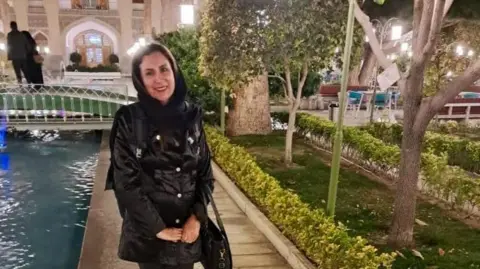
UN experts and 400 prominent women have urged Iran not to execute Zahra Tabari, a 67-year-old electrical engineer and women's rights activist. Ms. Tabari was arrested in April and accused of collaborating with a banned opposition group, the People's Mujahideen Organisation of Iran (PMOI). In October, she was convicted of 'armed rebellion' by a Revolutionary Court after a trial via video link that lasted less than 10 minutes.Her family reported that the verdict relied on questionable evidence: a piece of cloth with 'Woman, Resistance, Freedom' and an unpublished audio message. Iran's authorities have remained silent about her case.At least 51 others face the death penalty in Iran for various national security offences, as noted by the UN. Experts representing the UN Human Rights Council condemned the case as indicative of serious violations of international law.Tabari's arrest was marked by a lack of due process, including interrogation under duress and absence of adequate legal counsel. The experts emphasized that executing her under these conditions would be arbitrary and a violation of human rights.The public appeal for her release included many notable figures, highlighting the severe implications of Iran’s treatment of women’s activism. Iran is currently the leading nation for executions of women per capita, and the case exemplifies the oppressive environment for those advocating for gender equality. Tabari's situation is paralleled by fellow activist Pakhshan Azizi, who is also facing the death penalty for similar charges related to her advocacy.According to Iran Human Rights, executions in the country spiked significantly in 2025, with a significant percentage for national security crimes, raising alarms regarding the state’s crackdown on dissent.