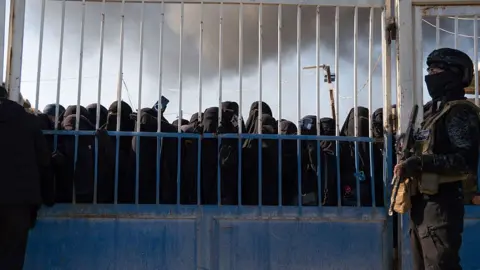
The United Nations (UN) has announced its decision to take over management of the Al-Hol camp in north-eastern Syria, which shelters thousands of people linked to the jihadist group Islamic State (IS). This transition comes after Kurdish-led forces responsible for the camp's administration withdrew in the face of advances by Syrian government forces, leading to widespread unrest that prompted aid agencies to halt operations.
Reports indicate that many residents attempted to breach camp perimeters in a desperate bid for escape, resulting in chaos and incidents of looting. Recent ceasefire agreements have seen much of northeastern Syria come under Damascus's control, effectively ending years of Kurdish autonomy.
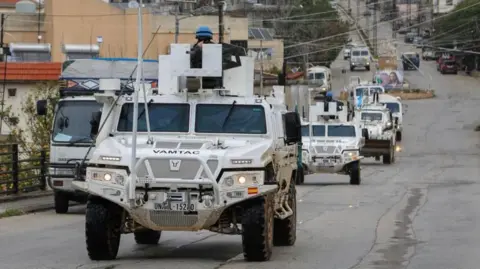
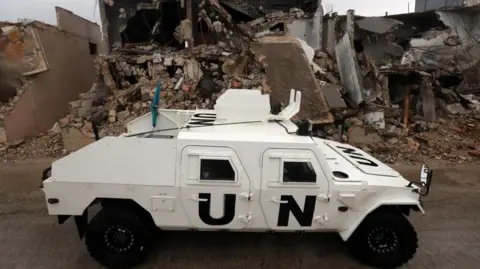
During a briefing to the UN Security Council, Edem Wosornu, a UN official, confirmed that the UN refugee agency (UNHCR) has assumed responsibility for camp operations and is collaborating with Syrian authorities to restore humanitarian access. However, UN spokesman Stéphane Dujarric warned that conditions inside the camp remain tense and volatile, with humanitarian efforts still suspended due to the preceding violence.
In related developments, the US is undertaking its initiative to transfer high-risk detainees from the region. The US Central Command stated that it has begun moving around 7,000 suspected IS fighters from northeast Syria to Iraq, with the first 150 detainees already relocated to secure locations across the border.
Iraqi officials have indicated that all transferred detainees will be prosecuted under Iraqi law, underlining a commitment to regional and international security. Yet, human rights organizations have raised alarms regarding the potential for severe abuses these detainees may face, including torture and capital punishment without proper judicial processes.
There are concerns that this operation does not become a long-term geopolitical burden for Iraq alone, as highlighted by Iraq's deputy UN ambassador, while Syria's UN envoy expressed support for the US's repositioning of IS detainees.
Advocacy groups have also warned of imminent dangers for those transferred, including British nationals, with calls for the UK government to intervene. The Reprieve charity has stressed that many remain detained within the region's camps and prisons, exacerbating the complex humanitarian crisis.