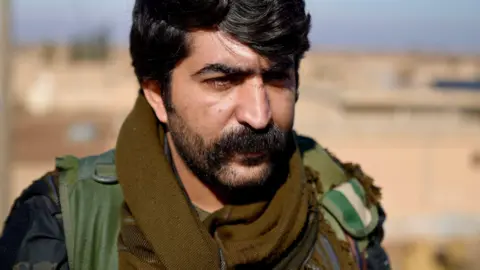
As a veteran Syrian Kurdish fighter, Commander Azad – whose nom-de-guerre means freedom - walks with a limp and wears his battle scars with pride. My leg was injured when we were bombed by a Turkish warplane in 2018, he says. And this was shrapnel from a suicide bomber, he adds, rolling up his sleeve to reveal a deep gouge in his arm. My back, abdomen and lower body were all injured in four separate attacks by Daesh, he says, using the Arabic acronym for the Islamic State group (IS).
His latest wound is below the surface, and cuts deep – what he sees as betrayal by a former friend, the United States. After IS seized around a third of Syria and Iraq in 2014, the US and the Kurds worked hand in glove to drive them out. Not anymore. History will hold them accountable, says the commander, who has a handle-bar moustache and wears a green fringed scarf around his neck. Morally it's not right. But we will keep fighting until our last breath. We are not cry-babies.
Their current fight is with the central government in Damascus which wants to extend its control across all of Syria, including the Kurdish autonomous region in the northeast. In the past two weeks, government troops have pushed the Kurdish-led Syrian Democratic Forces (SDF) out of resource-rich areas they have controlled for a decade – since defeating IS.
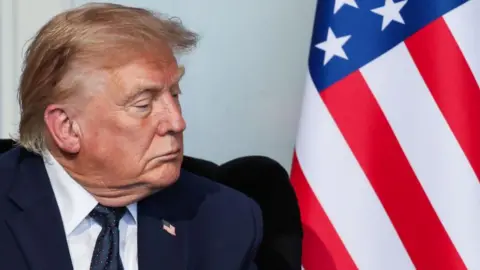
The White House has strongly backed Syria's interim president, Ahmed al-Sharaa - a former Jihadi. That's a slap in the face for the Kurds. The SDF lost 11,000 fighters battling the jihadis of IS.
Commander Azad compares the president to Abu Bakr al-Baghdadi, the late founder of IS. They are the same thing. After Jolani took over, Syria will always be a war zone, he says.
With a fragile ceasefire due to expire on 7 February, Kurdish leaders signal their readiness for renewed conflict should the need arise. We don’t want war, but if we are forced down that path we will fight back. Every neighborhood will turn into a hell for them, warns Siyamend Ali of the People's Protection Units (YPG).
The Kurdish region has also been holding about 8,000 suspected IS fighters in prisons, raising concerns about what might happen if hostilities break out anew in an area so recently scarred by war.
His latest wound is below the surface, and cuts deep – what he sees as betrayal by a former friend, the United States. After IS seized around a third of Syria and Iraq in 2014, the US and the Kurds worked hand in glove to drive them out. Not anymore. History will hold them accountable, says the commander, who has a handle-bar moustache and wears a green fringed scarf around his neck. Morally it's not right. But we will keep fighting until our last breath. We are not cry-babies.
Their current fight is with the central government in Damascus which wants to extend its control across all of Syria, including the Kurdish autonomous region in the northeast. In the past two weeks, government troops have pushed the Kurdish-led Syrian Democratic Forces (SDF) out of resource-rich areas they have controlled for a decade – since defeating IS.
The White House has strongly backed Syria's interim president, Ahmed al-Sharaa - a former Jihadi. That's a slap in the face for the Kurds. The SDF lost 11,000 fighters battling the jihadis of IS.
Commander Azad compares the president to Abu Bakr al-Baghdadi, the late founder of IS. They are the same thing. After Jolani took over, Syria will always be a war zone, he says.
With a fragile ceasefire due to expire on 7 February, Kurdish leaders signal their readiness for renewed conflict should the need arise. We don’t want war, but if we are forced down that path we will fight back. Every neighborhood will turn into a hell for them, warns Siyamend Ali of the People's Protection Units (YPG).
The Kurdish region has also been holding about 8,000 suspected IS fighters in prisons, raising concerns about what might happen if hostilities break out anew in an area so recently scarred by war.