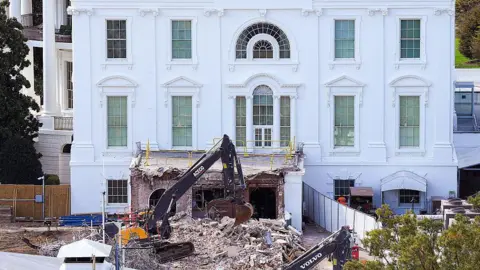
Construction of the underground and above-ground portions of President Donald Trump's White House ballroom project will be allowed to continue, a US appeals court has announced. The US Court of Appeals for the District of Columbia granted an administrative stay after the Trump administration appealed against US District Judge Richard Leon's decision to halt above-ground construction on Thursday.
Construction is now expected to continue until the next hearing on June 5. This week's rulings followed the appeals court's order for the judge to reconsider the national security implications of halting the work, after he temporarily blocked all construction of the ballroom in March.
The ruling marks a victory for the president in his effort to redesign the iconic structure. The judge had previously expressed concerns that the project required congressional approval and mentioned that the administration's reclassification of the ballroom plans as vital for national security appeared to be an attempt to circumvent this requirement.
In response to the ruling, Trump criticized Judge Leon on social media, stating that the decision would hinder future leaders from having a secure meeting place, describing the entire project as vital for national security and military operations. Trump also emphasized the underground component of the complex, suggesting it would include essential features like bomb shelters and medical facilities.
The Justice Department had filed an appeal against the decision to halt construction, arguing that the previous ruling jeopardized the safety of the president and national security due to the large void left next to the Executive Residence.
The controversy surrounding the ballroom project arose last year when the National Trust for Historic Preservation sued the White House, alleging that the construction began without proper filings or congressional authorization. The East Wing of the White House, built in 1902, was demolished in October to make way for the new ballroom, which is projected to hold 1,350 guests and cost around $400 million, funded entirely by private donors.
Construction is now expected to continue until the next hearing on June 5. This week's rulings followed the appeals court's order for the judge to reconsider the national security implications of halting the work, after he temporarily blocked all construction of the ballroom in March.
The ruling marks a victory for the president in his effort to redesign the iconic structure. The judge had previously expressed concerns that the project required congressional approval and mentioned that the administration's reclassification of the ballroom plans as vital for national security appeared to be an attempt to circumvent this requirement.
In response to the ruling, Trump criticized Judge Leon on social media, stating that the decision would hinder future leaders from having a secure meeting place, describing the entire project as vital for national security and military operations. Trump also emphasized the underground component of the complex, suggesting it would include essential features like bomb shelters and medical facilities.
The Justice Department had filed an appeal against the decision to halt construction, arguing that the previous ruling jeopardized the safety of the president and national security due to the large void left next to the Executive Residence.
The controversy surrounding the ballroom project arose last year when the National Trust for Historic Preservation sued the White House, alleging that the construction began without proper filings or congressional authorization. The East Wing of the White House, built in 1902, was demolished in October to make way for the new ballroom, which is projected to hold 1,350 guests and cost around $400 million, funded entirely by private donors.