In brief
After an Israeli-US strike on Iranian leaders, President Trump faced credible Iranian missile threats on Air Force One. In July, Secret Service agents replaced the presidential 747 with a quieter C‑32A, moving him through a catering truck to avoid detection. The swap illustrates how the war is transcending the battlefield, making Trump a direct target for retaliation. U.S. officials have recorded multiple Iran‑backed assassination plots and have divested the president’s travel strategies to protect him. The incident marks a new chapter in the tense U.S.–Iran conflict.
After a January 2025 strike that killed top Iranian leaders, President Trump warned his adversaries of imminent retaliation.
In the weeks following the raid, intelligence gathered by U.S. officials suggested that Iranian forces had developed a credible missile threat against Air Force One.
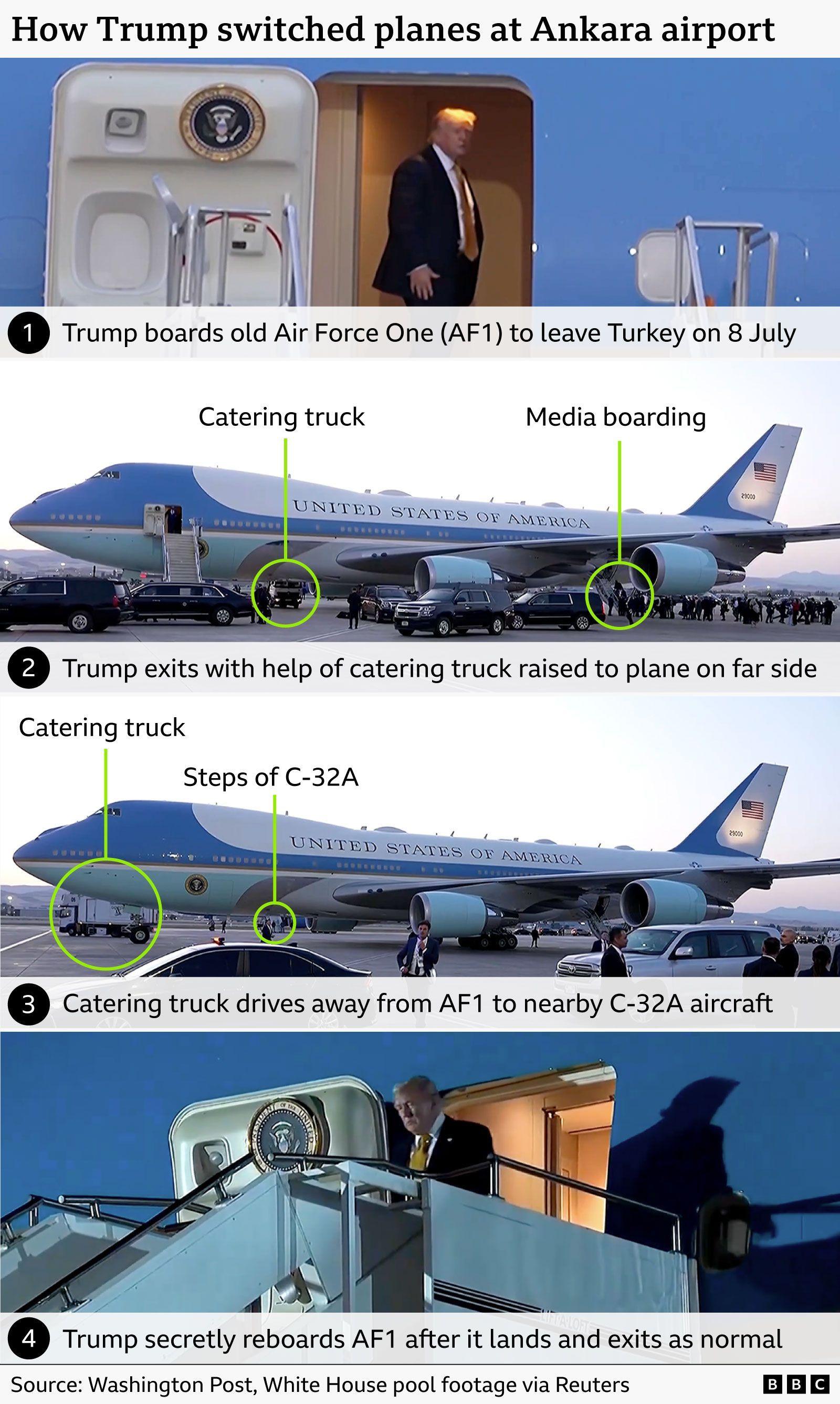
According to reports, the threat prompted Secret Service agents to conduct a covert operation on July 8, 2026, as Trump returned from the NATO summit in Ankara, Turkey.
The President’s 747 was abandoned on the tarmac and a catering truck was staged at the rear of the aircraft to facilitate a silent transfer.
The catering truck rerouted Trump and his immediate security team to a C‑32A military jet that was positioned a few metres away from the 747. Once the swap was complete, the C‑32A took off while the 747 remained on the ground, covered by media and White House staff, creating a decoy that masked the true flight path.
The operation was shrouded in secrecy; journalists were told to keep the movements under wraps until the final flight cleared the airspace over Turkey. The choice to conceal the swap was aimed to protect the President’s image while ensuring his safety.
The incident follows a broader pattern of Iranian threats that has included an alleged assassination plot by a Pakistani national, a charge brought forth in 2026, and a 2024 indictment of an Afghani citizen. These cases underscore a long‑standing attempt by Iran to target the American president.
Trump’s comments to ABC’s Jonathan Karl, where he claimed “I got him before he got me,” echo the personal stakes politicians feel in this conflict. Defense Secretary Pete Hegseth echoed the sentiment, stating that Iran had tried twice to kill Trump and was unsuccessful.
The aggressive posture is reflected in diplomatic rhetoric; banners bearing slogans like #KillTrump appear at Iranian rallies, and murals accusing the president of being a target have appeared in Tehran.
For those interested in the full picture of the Air Force One swap, see the Washington Post’s step‑by‑step graphic here. For more on related U.S.‑Iran intelligence operations, consult the BBC’s coverage of the July ceremony at the BBC newsroom.