In brief
Strong winds have fueled a raging wildfire in western Crete, prompting the evacuation of around 8,000 residents and tourists overnight. Two firefighters died confronting the blaze, and a third lost his life in nearby Greece. The fire, one of the island’s largest, has a front over 15 km long and spreads beyond control. Authorities are deploying 224 firefighters and aircraft, while neighboring Spain and Turkey report their own fire‑fighting challenges. Climate‑driven heatwaves are turning Europe into a tinderbox.
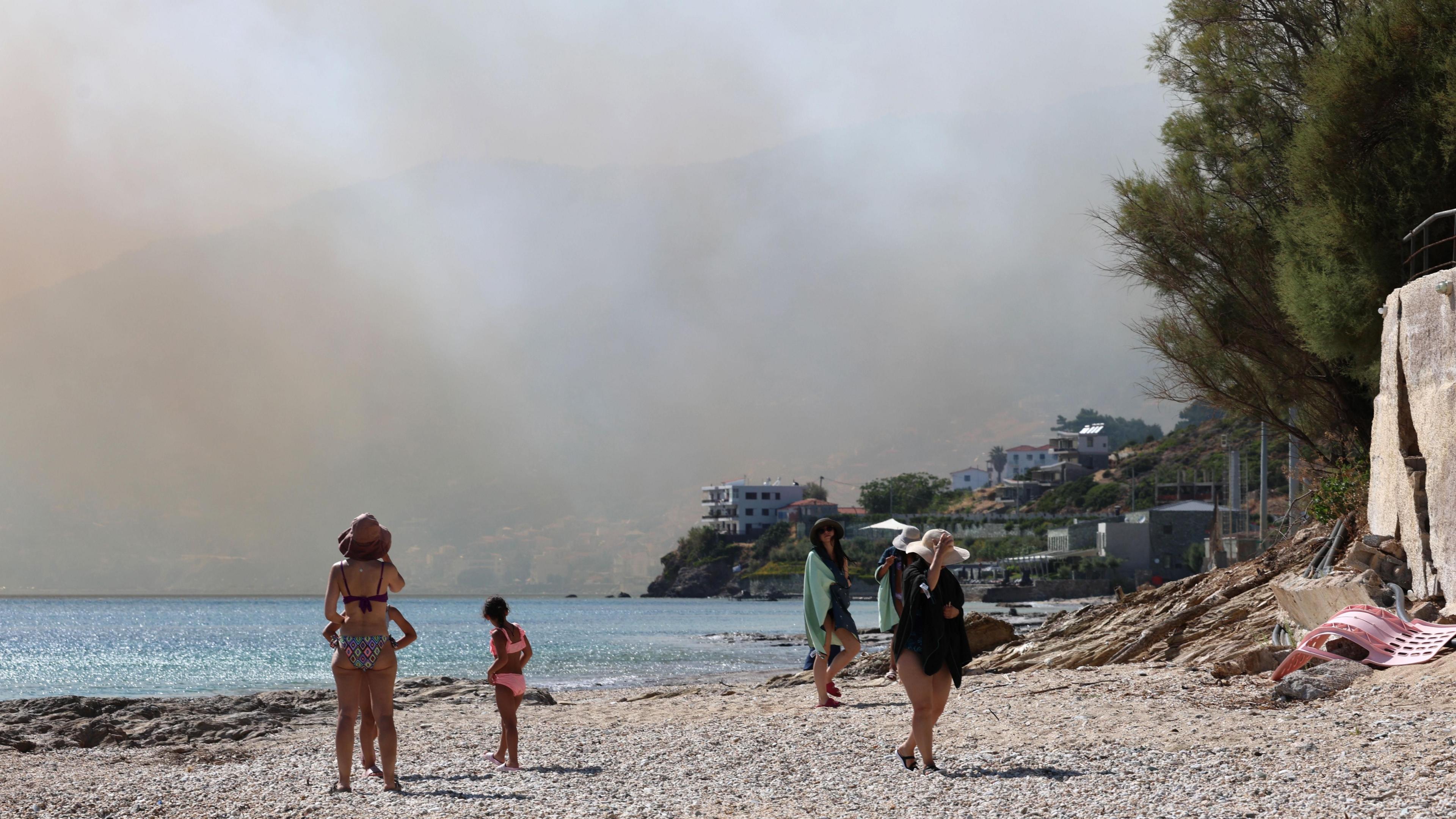
Greek authorities ordered the evacuation of roughly 8,000 people from the western part of Crete as a massive wildfire, triggered by 125‑km‑hour winds, swept through the region. The blaze, which broke out in Rethymno on Wednesday, has a front that stretches over 15 km and is spreading unchecked.
The rush to safety followed the death of two fire‑fighters in the area and a third loss near Gotheno in the Peloponnese. Governor Maria Lioni described Wednesday as a "dark day" for the island, noting that gusts of up to Beaufort scale 11—readily classified as violent—hampered containment work, even preventing firefighting aircraft from taking off early Thursday.
As summer temperatures across Europe reach record highs in excess of 40 °C, the continent faces unprecedented fire‑fighting challenges. While the Crete fire continues to advance, authorities have mobilised 224 firefighters, 53 engines, 11 specialist units and two aircraft in an effort to control the blaze.
The Greek Fire Service chief, Theodoros Vagias, issued a formal condolence note for the two firefighters who perished, naming them 58‑year‑old Emmanouil Stratidakis and 25‑year‑old Pantelis Diamantakis. Their funerals are scheduled for Thursday.
Beyond Crete, the continent is rallying fire‑fighting teams. Near the Spanish border with Portugal, around 600 people were relocated from Zamora after a fresh blaze erupted. In Portugal, five people were reported injured in the eastern town of Valpaços. Meanwhile, an uncontrolled fire in Spain’s Ávila province—its largest in history—has scorched over 43,000 hectares. In Turkey, dozens of homes were evacuated, but most fires are reportedly under control.
The waves of fire that have been sweeping Greece, Iberian Peninsula and the Aegean underscore how climate change is turning the continent into a tinderbox for summer conflagrations. Copernicus Climate Change Service data confirm that Europe is heating up twice as fast as the global average. The resulting heatwaves, water shortages and heightened fire risk pose a massive risk to tourism and local communities alike.
In response, local governments are rapidly erecting temporary shelters and distributing supplies to migrants displaced by the blazes. Tourists finding themselves in harm’s way are urged to follow official guidance, avoid scattered vegetation near the fire line, and head toward closer fire‑safe zones.
The fire in Crete now has a warning zone larger than the entire core of Andorra, emphasising that this is no trivial uptick in temperatures but a direct threat to life, property and the local economy that depends on tourism.