In brief
Moerdijk, a quaint fishing village in the Netherlands, is potentially at risk of being demolished to accommodate new energy infrastructure as the government seeks ways to support its growing offshore wind energy sector. Residents express their frustrations and fears of losing their homes, while officials highlight the pressing need for land to meet national energy demands. The ongoing debate raises questions about sustainability, community, and the balance between environmental goals and local lives.
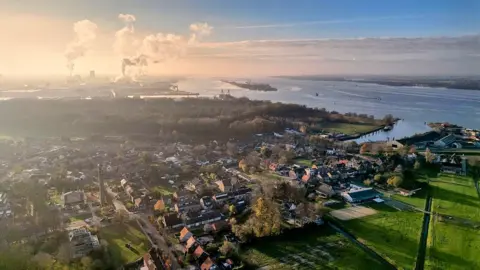
In the south of the Netherlands, beside a wide estuary, a village of around 1,100 people is likely to disappear from the map.
Moerdijk, a small fishing community 34km (21 miles) south of Rotterdam, is on the fault line of the nation's green energy transition. The Dutch government says the country needs vast new sites to build high-voltage substations where cables carrying electricity from growing offshore wind farms can be connected to the national grid.
Yet the Netherlands is short of land. Officials argue that Moerdijk, positioned next to ports, motorways, and existing overhead power lines, is a prime location for such a facility. Residents face the looming threat of seeing their homes demolished within the next decade.
Fishmonger Jaco Koman, deeply rooted in the community, laments, We are being brought to the slaughterhouse. His family's fishing business has provided for its livelihood since 1918, yet he worries about the future of both his business and his home.
The unease in Moerdijk is palpable as locals navigate the uncertainty of their village's fate. With for-sale signs springing up and buyers hesitant to invest, a sense of mourning blankets the community. Shop owner Andrea expresses her fear of losing her home, built by her husband, where their children were born, while also contemplating the consequences for local graveyards.
Although residents acknowledge the need for more renewable energy, many argue that solutions shouldn't come at the expense of their homes. The Dutch government’s decision on Moerdijk's future is expected later this year, amidst ongoing discussions about how to balance national energy needs with local community preservation.
As the debate unfolds in Moerdijk, it serves as a microcosm of a broader dilemma faced by the Netherlands: balancing its ambitious energy goals with the preservation of its communities.