Swiss voters reject stricter neutrality, favoring sanctions against Russia.
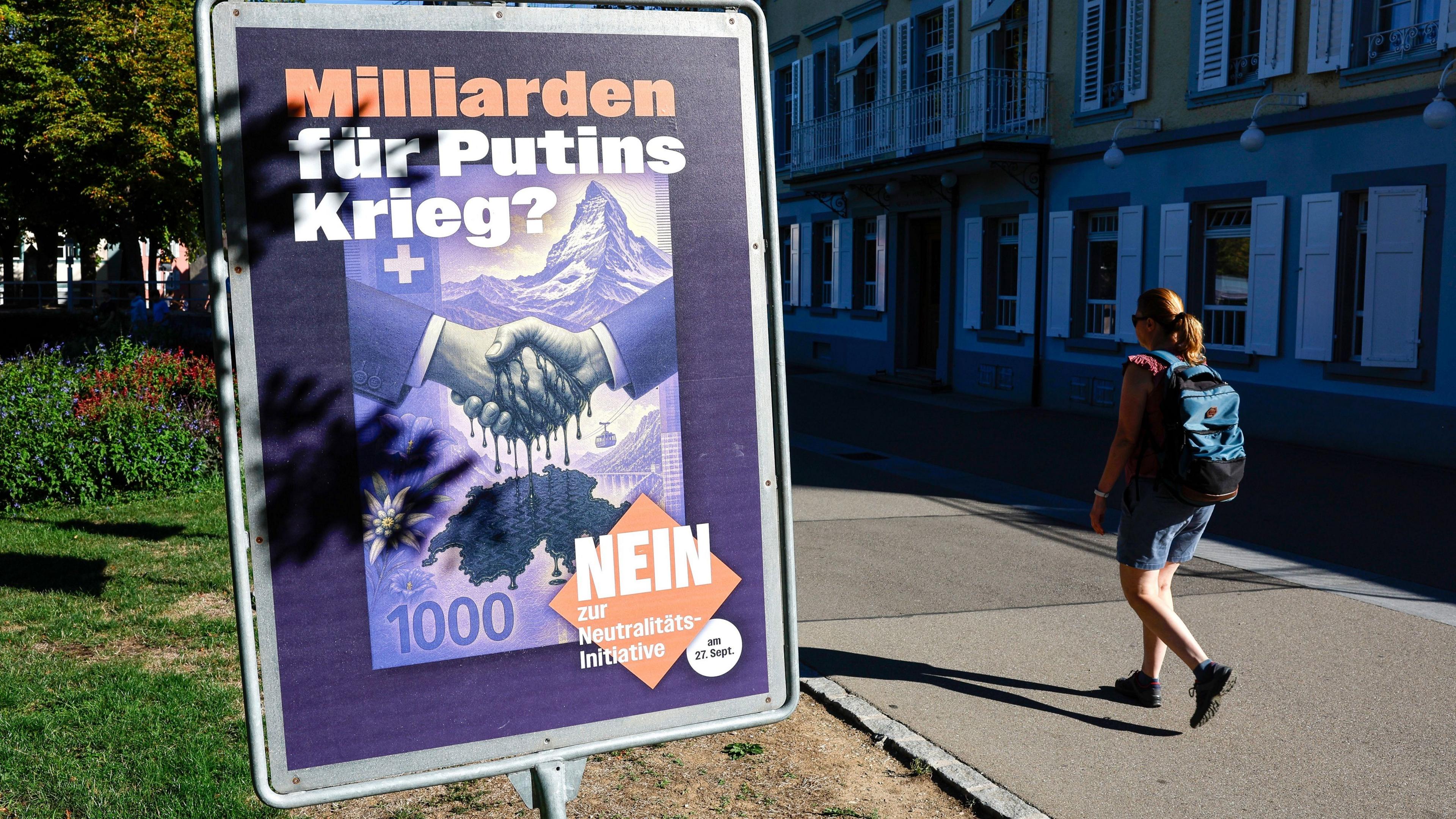
In a landmark referendum held earlier this month, more than 70% of Swiss citizens voted against a proposal that would have required United Nations approval before the country could impose sanctions. The measure, backed by Russia and the right‑wing Swiss People’s Party, would have also limited Switzerland’s ability to jog closer ties with the NATO military alliance.
"People have a clear idea of what Switzerland’s neutrality is supposed to achieve," said Lukas Golder, co‑director of the research institute GFS. Bern, "the vote shows Switzerland supports sanctions against Russia while maintaining its neutral stance.
Foreign Minister Ignazio Cassis stressed during a televised debate that neutrality has always been applied with flexibility. He said Switzerland would not remain silent when international rules are breached, although he reaffirmed that the country had no plans to lift its ban on selling arms to war zones such as Ukraine.
Switzerland’s neutrality was formally recognised in 1815 at the Congress of Vienna and codified in the 1907 Hague Convention, which prohibited the country from supplying weapons to belligerent states. The nation has a history of balancing its neutral position with the need to uphold international law, evident in past decisions to refuse German ammunition for Kyiv and to apologise for its wartime policies in the 1990s.
With a system of direct democracy, major political decisions such as this are often left to the voters through referenda, underscoring how national sentiment can shape foreign policy even in the face of global conflict.