In brief
The Strait of Hormuz remains a critical shipping lane under threat as Iran warns vessels seeking to cross without permission may face dire consequences. A recent ceasefire has done little to encourage shipping activity, with only a few crossings reported since the agreement, highlighting international fears and economic repercussions.
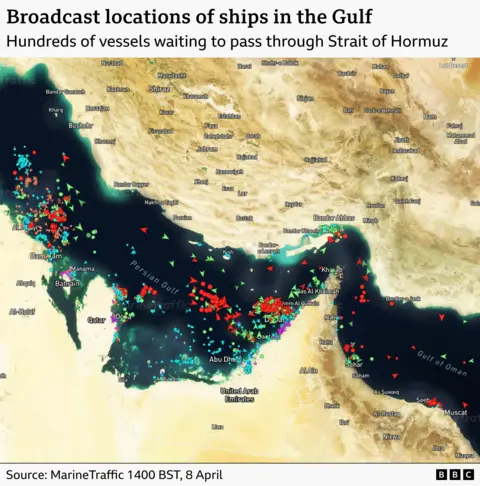
The Strait of Hormuz has re-emerged as a focal point amid tensions between the US, Israel, and Iran, crucially impacting one of the world’s most vital shipping lanes, which facilitates the transport of about a fifth of global oil and gas. A ceasefire reached recently stipulated that 'safe passage' must be assured, yet BBC Verify's evaluation indicates that minimal maritime activity has occurred since. The past weeks of disruption have escalated global energy prices and underscored the heavy reliance of international supply chains on this narrow strait, which is merely 21 miles wide at its tightest.Despite a slight decrease in oil prices following the ceasefire news, shipping analysts caution an anticipated trickle of crossings in the near future. Lars Jensen from Vespucci Maritime expressed concerns regarding the ambiguity in transit requirements and emphasized the hesitation stemming from Iran's recent naval warnings about severe consequences for unauthorized crossings. As of April 8, only three tankers have successfully navigated through the strait since the treaty. In stark contrast, prior to hostilities erupting, an average of 138 vessels crossed daily. Analysts point to the uncertainty that still pervades due to Iran's control of the area alongside additional concerns about potential maritime mines.Further complicating the issue, discussions have emerged regarding possible toll payments to Iran for a safe passage, raising legal questions under current US sanctions which could jeopardize shipping lines. Negotiations for secure passage have progressed for some nations like India and Malaysia, but the potential need to pay tolls remains a contentious and risky prospect.