In the complex mosaic of the new Syria, the old battle against the group calling itself Islamic State (IS) continues in the Kurdish-controlled north-east. It's a conflict that has slipped from the headlines - with bigger wars elsewhere.
Kurdish counter-terrorism officials have stated that IS cells are regrouping, increasingly launching attacks across the region.
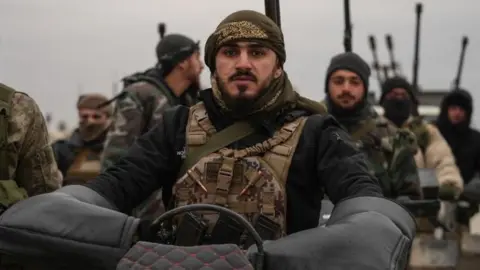
One tragic example is Walid Abdul-Basit Sheikh Mousa, a 21-year-old fighter who lost his life shortly after fulfilling a dream of owning a motorbike, as he fought against IS. His mother, Rojin Mohammed, mourns her son, remembering his warmth and nurturing spirit while expressing a desire for revenge against the group responsible for so many deaths.
According to officials, attacks by Islamic State have surged by ten-fold since the previous year due to a security vacuum following the ousting of Syria's long-time dictator Bashar al-Assad. The Kurdish People's Protection Units (YPG), which has been battling IS for over a decade, reported significant losses, showcasing the escalated risks posed by resurgent militants.
The Al-Sina prison, one of the largest in the region, holds around 8,000 IS suspects from various nations but lacks legal proceedings for these individuals. Detainees imply that despite the harsh conditions, the prison's hierarchy still mirrors that of the outside world.
Amongst the detainees is Hamza Parvez, who, with prison guards listening, recounts his recruitment into IS as a soldier. He pleads for repatriation to the UK, expressing concerns about his safety amidst worsening health conditions.
Meanwhile, families of suspected IS fighters live in dire conditions in camps like Roj and al-Hol, facing instability, health problems, and psychological trauma. Former residents like Mehak Aslam, who claims she only came to Syria to provide aid, face societal ostracization, fearing for their children's futures.
This situation underscores the broader implications of IS's resurgence, as it not only threatens regional stability but raises questions about international responsibility in addressing the plight of those entangled in the conflict.