In brief
Arnold Ncube, a 25-year-old South African, represents millions who live without citizenship and vital documentation. Deprived of education and job opportunities, he strives to break free from a life of invisibility. The issue of statelessness affects over 10,000 in South Africa alone, raising concerns about their basic rights to education and healthcare. This article delves into the systemic barriers and personal stories that highlight the urgent need for reform.
Many people may take their birth certificate, or similar official papers, for granted - hidden in a drawer and rarely seeing the light of day - but for those without one, it can lead to a shadow life or an uncertain existence.
This is thought to affect millions of people around the world, described as stateless, and 25-year-old South African Arnold Ncube is one of those.
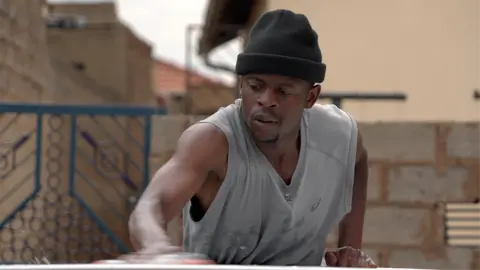
Because he has no state-issued documents, washing cars in the backstreets of Thembisa township near Johannesburg is one of the few ways he can make a living.
He was born in Johannesburg and his father is South African, qualifying him for citizenship here. But when he tried to register for secondary school, he realised he didn't have a birth certificate.
Having been abandoned by his parents - his dad left before he was born and his mum when he was 14 - he could not prove his status.
It's a painful thing, he says. You're basically invisible. You don't exist. It's like you're living in the shadows. You don't have a bank account, you can't apply for a decent job that you can earn a living with.
He adds that he tries to stay positive but it's been challenging.
When I see my peers, they are done with school now. Whereas I couldn't study further. It's a lot. Depression was once my friend.
Arnold is one of at least an estimated 10,000 stateless people living in South Africa who, despite being born here, are struggling to prove their nationality and access public services.
There are no official statistics available on stateless people here because they tend to slip through the cracks. So the figures are based on estimations by organisations like the UN's refugee agency, the UNHCR and civil rights organisations.
With no citizenship, stateless people cannot get documents and struggle to get access to basic necessities including education and healthcare.
Statelessness is caused by many factors, including administrative barriers and poor record-keeping. As a result the real number of stateless people is hard to gauge in many parts of the world.
Human rights lawyer Christy Chitengu, who was stateless herself until recently, highlights the challenge of securing rights for individuals like Arnold. Chitengu states that statelessness is not just a legal issue; it's about recognizing the entitlement of every individual to live a dignified life.
As Arnold continues his fight for recognition and the right to education, the broader implications of statelessness remain a pressing concern, challenging authorities and communities to address these systemic barriers.