In brief
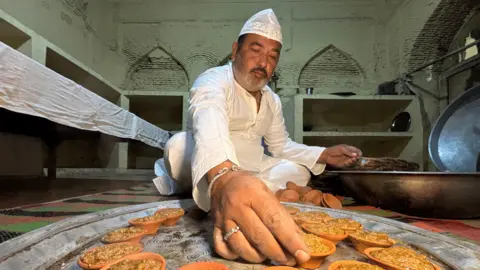
Located within the grounds of Chota Imambara, a royal kitchen built in 1837 for the Awadh rulers is being restored to its former glory. The site's history reflects a commitment to serving both royal families and ordinary people, particularly during significant religious occasions. Today, the kitchen still operates, providing meals to the needy during Ramadan and Muharram. Restoration efforts aim to recapture the kitchen's original essence, utilizing traditional materials to repair the crumbling structure and uphold the legacy of community service pioneered by its founder, Muhammad Ali Shah.
In northern India's Uttar Pradesh state, a team of workers is diligently restoring a centuries-old royal kitchen that once catered to the rulers of the now historical Awadh region. Nestled within the expansive Chota Imambara complex, this kitchen, built in 1837 by Muhammad Ali Shah, stands as a testament to a royal legacy that embraced public service. During its peak, the kitchen prepared meals not only for the elite but also for ordinary citizens during significant occasions and religious gatherings.Despite the transformation in India's royal landscape, traditions from the past have prevailed. Nearly 200 years later, this kitchen actively serves thousands of meals during Ramadan and Muharram, reinforcing a commitment to community service. The project's restoration not only safeguards a historical structure but also revives the standards set by past generations, utilizing traditional materials and methods.The kitchen's continuous operation is rooted in history; in 1839, Muhammad Ali Shah established a fund through the East India Company to guarantee its maintenance. Managed by the Hussainabad Trust today, it remains true to its role in the community. As restoration progresses, the focus on authenticity includes recreating original lime-based mortar and maintaining the intricate designs that define the structure.For descendants of the Awadh royal lineage, the endeavor is deeply personal. Yasir Abbas emphasizes the importance of preserving this cultural heritage and the legacy of serving food to those in need. Locals, too, cherish the kitchen’s enduring spirit, as it continues to evoke memories of communal meals shared across generations.In every Ramadan, the kitchen distributes around 700 coupons daily, ensuring that the poor and marginalized receive nourishing meals, a practice that echoes the benevolence of its founder. This culinary legacy is not just a remnant of the past; it is a living tradition, encapsulating the essence of service and community, embodying the spirit of generosity instilled by Muhammad Ali Shah himself.