In brief
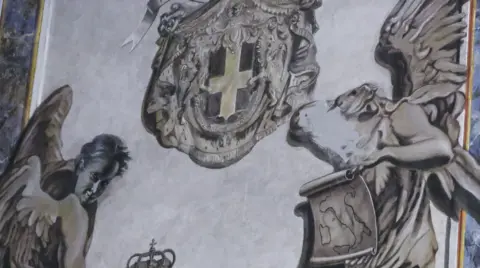
A fresco at the Basilica of St Lawrence in Lucina, Rome, which bore a striking resemblance to Prime Minister Giorgia Meloni, has led to investigations after an outcry from the public. The artist, Bruno Valentinetti, initially denied the claims but later admitted the likeness and confirmed he scrubbed out the face after orders from the Vatican. The Diocese of Rome plans to restore the original features following criticism from church officials about the misuse of sacred artwork.
The face of an angel on a restored church fresco in Rome that sparked outrage because of its likeness to Italy's prime minister has been crudely scrubbed out by the artist who painted it. Church and government officials launched an investigation after pictures of a cherub at the Basilica of St Lawrence in Lucina showed her newly restored face had an uncanny likeness to right-wing leader, Giorgia Meloni.The artist, Bruno Valentinetti, at first denied the claims, but admitted that it was indeed the prime minister's face, while insisting that it was similar to the original. Valentinetti, 83, stated that he was ordered to cover up the painting by the Vatican.The original facial features will now be restored, as the office of the Diocese of Rome announced following a strongly worded statement from Rome's Cardinal Baldassare Reina, expressing disappointment over the incident and emphasizing that sacred art should not be misused.Infamous for its newfound notoriety, the Basilica of St Lawrence, located near Meloni's office, has since attracted numerous curious visitors, drawn more by the spectacle than by faith, according to the basilica's priest, Rev. Daniele Michelett.Michelett remarked that he had not noticed the resemblance during the restoration but agreed that it didn't adhere to the original sacred context.The controversial fresco isn't an ancient artwork; it was painted in 2000 and not under heritage protection. It depicts a cherub holding a map of Italy in a chapel dedicated to Italy's last king, Umberto II.Bruno Valentinetti had been commissioned to restore the fresco after water damage, and the agency responsible for Rome's cultural heritage has since stated that any further restorations must be authorized.The BBC has reached out to the Vatican for comment.