In brief
A recent study reveals that promoting female entrepreneurship in India can significantly enhance women's participation in the workforce. Although women constitute a substantial part of the population, their contribution to India's GDP is only 17%, primarily due to low labor participation and barriers to entrepreneurship. By supporting female-led businesses, opportunities can be created for other women, driving economic growth and challenging existing social norms that limit women’s employment.
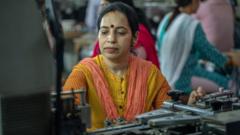
Female entrepreneurs in India hold the key to unlocking greater workforce participation among women, as highlighted in a recent study by researchers Gaurav Chiplunkar and Pinelopi Goldberg. Despite representing nearly half of the population, women only contribute 17% to India’s GDP—remarkably below the global average. The report reveals that while 14% of entrepreneurs in India are women, the majority run significantly smaller firms compared to their male counterparts.Evidence suggests that female-owned businesses are more likely to create job opportunities for other women, reinforcing the idea that entrepreneurship is crucial for women's empowerment. The World Bank's analysis across 138 countries from 2006 to 2018 found that female-run enterprises employ a higher percentage of women compared to those led by men. This trend is particularly pronounced in male-owned businesses where women represent only 23% of the workforce.Despite the challenges in workforce participation—such as household responsibilities and limited access to childcare—female entrepreneurs are uniquely positioned to drive economic change. A study conducted by the 2023 State of India's Livelihoods Report indicates that women's participation in India's labor force has seen minimal change over three decades. Many women-owned firms operate as microenterprises, often without enough resources to expand.These hurdles may hinder India's potential for economic growth; removing barriers could amplify the number of female-owned businesses, significantly impacting GDP. Chiplunkar argues that promoting female entrepreneurship can overcome these societal and economic challenges more swiftly than altering deeply embedded social norms.Notably, there is a context of progress, as recent indicators suggest an uptick in women's labor force participation. However, this increase has often been tied to self-employment rather than gainful employment with contracts and social benefits. Deshpande points out that achieving a sustainable workforce requires not just more women entering the job market, but also meaningful employment opportunities that ensure fair wages and job security.Research indicates that by allowing women to account for over half of the new workforce, India could achieve an 8% growth in GDP by 2030. Therefore, policies encouraging female entrepreneurship and addressing employment barriers are not just beneficial—they are essential.