In brief
At the Singapore Airshow, the luxury private jet market's explosive growth was highlighted, particularly as ultra-high-net-worth individuals continue to surge in number. Manufacturers like Gulfstream and Dassault are adapting to meet this demand for efficiency and comfort in business travel, enhancing their jets with features designed to minimize travel fatigue. Despite environmental criticisms, the industry remains optimistic about expansion in the Asia-Pacific region.
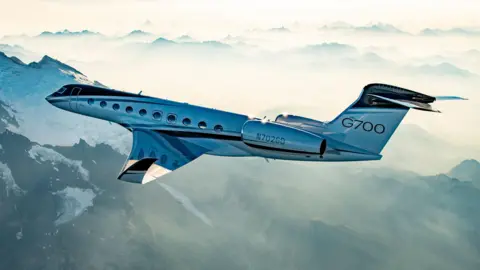
The Singapore Airshow showcased Gulfstream's G700, one of the most sought-after luxury jets, attracting long lines of potential buyers eager to explore its lavish interiors. With the global private jet market witnessing a significant uptick, reflecting a rise of 35% since pre-pandemic levels, aviation manufacturers are turning their focus towards a more affluent demographic. The number of ultra-high-net-worth individuals has surged over 70% from 2020 to 2025, further driving demand for private jet travel.Industry leaders emphasize a shift towards larger business aircraft suited for corporations and wealthy individuals, with Gulfstream's Scott Neal noting, More companies are doing business globally... the most efficient way to do that is on a business aircraft.Private jets offer unparalleled comfort—each cabin designed like an elegant living space, equipped with luxurious amenities. The market is highly competitive, with major players like Dassault and Bombardier also vying for attention in this lucrative sector.However, as demand increases, so does scrutiny over environmental impacts. The industry faces criticism for its carbon footprint, with many jets being recognized as significant contributors to emissions. In response, companies are pushing advancements in sustainability, promoting jets capable of using sustainable aviation fuel, albeit at a higher cost and limited availability.Despite the eco-pushback, private travel remains attractive for those seeking efficiency in travel logistics. Emerging markets in Southeast Asia, driven by a rapid increase in infrastructure and connectivity, are highlighted as key growth areas. The luxury travel segment, from private jets to premium cabin offerings in commercial airlines, clearly illustrates a growing trend towards catering to the wealthiest of travelers. As the number of super-rich continues to grow, so too does the allure of a personalized travel experience, leaving little sign of this luxury trend abating any time soon.