In brief
A groundbreaking study conducted by scientists from the Natural History Museum and other institutions reveals that deep-sea mining operations lead to a 37% reduction in animals in mined regions, raising serious concerns about the environmental impact. This research highlights the potential risks associated with extracting critical minerals from the ocean floor.
Machines mining minerals in the deep ocean have been found to cause significant damage to life on the seabed, according to scientists conducting the largest study of its type.
The researchers reported a 37% decline in the number of animals present in the paths traced by mining vehicles compared to untouched areas, reinforcing the serious ecological repercussions that deep-sea mining could entail.
Conducted by a team from the Natural History Museum in London, the UK National Oceanography Centre, and the University of Gothenburg, the study discovered over 4,000 animals in the remote Pacific Ocean, with 90% being new species.
While the demand for the critical minerals located in the depths of the ocean is increasing, deep-sea mining remains a contentious issue, hindered by environmental concerns. The International Seabed Authority has yet to approve commercial mining activities, but has issued numerous exploration licenses.
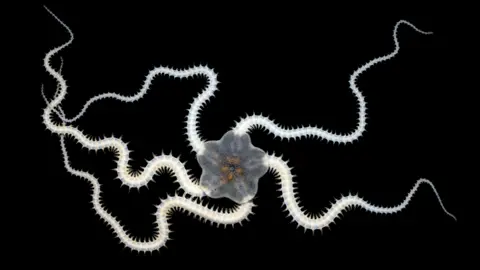
The researchers monitored biodiversity before and after a test mining operation, carefully assessing organisms ranging from 0.3mm to 2cm, such as worms and sea spiders. Post-operation findings indicated a 32% reduction in species diversity, primarily due to sediment removal which is home to these organisms.
Lead author Eva Stewart highlighted the devastating effect of sediment disruption, noting that removing the top layers of sediment greatly affects the ecosystems that inhabit it.
Concerns extend beyond immediate death rates, as pollution from mining activities could also harm less resilient species over time. While some animals may migrate post-disturbance, their return to former levels remains uncertain.
The research is especially significant as it underscores the urgent need to weigh the ecological costs against the potential benefits of extracting necessary minerals for green technologies, particularly as global demand for these resources is expected to surge by 2040.
In response to the findings, some experts argue that the current mining technologies are too destructive, with calls for the development of less invasive methods to mitigate ecological harm.
The study is published in the journal Nature Ecology and Evolution, firmly placing a spotlight on the complexities surrounding deep-sea mining practices and their impacts on marine biodiversity.