In brief
Aviation safety group Foundation for Aviation Safety asserts that the Air India 787 Dreamliner, which crashed during takeoff from Ahmedabad, had documented safety flaws dating back to its entry into service. Key issues implicated include numerous system failures, a notable in-flight fire incident, and ongoing investigations that may point to deeper safety culture concerns within Boeing.
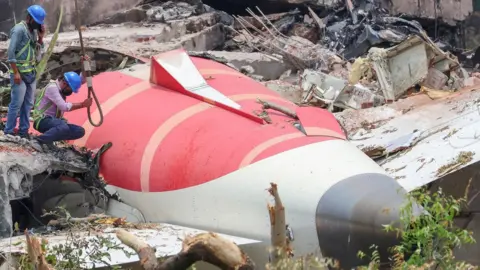
Aviation safety campaigners in the United States assert that the Boeing 787 Dreamliner that crashed in India last year exhibited numerous technical flaws, including a dangerous in-flight fire. The crash occurred on June 12, 2025, shortly after the aircraft took off from Ahmedabad bound for London, resulting in the tragic loss of 260 lives.
The Foundation for Aviation Safety, a US-based advocacy group, has submitted a detailed presentation to the US Senate, outlining its findings based on documents claimed to be linked to the aircraft's operational history.
While the official investigation continues, preliminary reports hint at a complex narrative. Boeing has so far declined to comment, as the inquiry remains active.
The aircraft in question, VT-ANB, was among the first batch of 787s manufactured, entering service in early 2014. According to the Foundation, there were indications of systemic failures from the outset, including electrical issues, circuit problems, and overheating components, raising red flags about its engineering and manufacturing processes.
Among notable incidents reported was a fire incident in January 2022 related to the P100 power distribution panel, which necessitated complete replacement of the affected component following severe damage detected upon approach to Frankfurt.
The aircraft's reliance on sophisticated electrical systems rather than traditional mechanical components has been criticized, particularly given the historical context of battery fires led to temporary fleet groundings in the past.
The Foundation's report, which addresses broader concerns regarding the 787 line, has been submitted to the US Senate Permanent Subcommittee on Investigations, known for its focus on Boeing's safety practices.
Investigators, including officials from India's Aircraft Accident Investigation Bureau (AAIB), are collaborating with their US counterparts since the aircraft was manufactured in the United States.
A previously published AAIB report revealed that critical fuel control switches were altered right after takeoff, prompting questions regarding crew actions leading up to the catastrophic failure. However, significant voices in the aviation industry suggest that a broader focus on systemic issues may be necessary to fully understand the tragedy.
As further scrutiny unfolds, many stakeholders continue to emphasize the need for transparency regarding aviation safety and regulatory oversight, particularly within high-capacity aircraft operations.