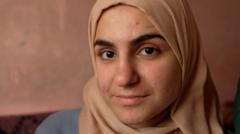
In a small, modest home in Homs, 20-year-old Baraa reflects on her harrowing childhood memories of war. Once a frightened girl escaping the devastation of her hometown, she now participates in vibrant celebrations signifying the end of Bashar al-Assad's long rule. Flanked by her sisters, Baraa recalls the nightmare of survival during the siege that marked her early years. The family shares their experiences of hunger and hardship, with their father, Farhan Abdul Ghani, recalling their desperate struggle for sustenance amidst the conflicts.
Despite the pain from the past, Baraa exhibits newfound hope. “I dream of finishing university and improving my English,” she shares, contrasting her youthful innocence with her current confidence and aspirations. The gains she sees now include falling prices and better living conditions, instilling a sense of relief in her father who can now afford meat for his family.
As Homs reconstructs itself, many residents confront their painful memories while cherishing the prospect of rebuilding together. Dr. Hayan al-Abrash, a former underground hospital director, vividly points out the ruins of his old workplace while reuniting with colleagues and inhabitants nearby, sharing stories of lost loved ones amidst the welcome sights of progress. “It’s a time to build Syria for everyone, but we must not forget those responsible for the horrors,” he emphasizes.
Rebuilding efforts also embrace shared mourning, as communities unite regardless of religious lines. Father Tony Homsy, a local pastor, echoes this sentiment. “It will take a long time to heal our memories,” he states, but he remains committed to fostering unity among residents.
As families, friends, and neighbors rebuild their lives in Homs, the echoes of sorrow are softened by the promise of a brighter future—one that honors resilience in the face of enduring challenges and painful histories. This emerging spirit of recovery highlights the dynamic journey of healing and the indomitable will of the people of Homs.
Despite the pain from the past, Baraa exhibits newfound hope. “I dream of finishing university and improving my English,” she shares, contrasting her youthful innocence with her current confidence and aspirations. The gains she sees now include falling prices and better living conditions, instilling a sense of relief in her father who can now afford meat for his family.
As Homs reconstructs itself, many residents confront their painful memories while cherishing the prospect of rebuilding together. Dr. Hayan al-Abrash, a former underground hospital director, vividly points out the ruins of his old workplace while reuniting with colleagues and inhabitants nearby, sharing stories of lost loved ones amidst the welcome sights of progress. “It’s a time to build Syria for everyone, but we must not forget those responsible for the horrors,” he emphasizes.
Rebuilding efforts also embrace shared mourning, as communities unite regardless of religious lines. Father Tony Homsy, a local pastor, echoes this sentiment. “It will take a long time to heal our memories,” he states, but he remains committed to fostering unity among residents.
As families, friends, and neighbors rebuild their lives in Homs, the echoes of sorrow are softened by the promise of a brighter future—one that honors resilience in the face of enduring challenges and painful histories. This emerging spirit of recovery highlights the dynamic journey of healing and the indomitable will of the people of Homs.