In brief
In Kentucky, sheep farmer Daniel Bell struggles to expand his solar energy setup as government funding opportunities dry up. The Trump administration's freeze on renewable energy grants has left farmers like Bell in a bind, unable to afford installations meant to reduce energy costs. These challenges highlight the wider implications for agriculture as many farmers look to renewable energy as a solution amidst rising costs.
Over the past few years, Kentucky sheep farmer Daniel Bell has been expanding his flock, and that meant he needed to build a new barn. His land is far from the power lines he’d need to heat it, so he figured rooftop solar would be ideal.
To help pay for it, he wanted to apply for a renewable energy grant through the Department of Agriculture’s Rural Energy for America Program, or REAP — only to find that the Trump administration had effectively halted grants through the program. Bell said that made it impossible to proceed with the idea on his land.
“For me, it’s just been about freedom. Freedom to lower bills, freedom to control my own assets,” he said.
Many farmers work on thin margins, struggling to stay profitable amid rising costs. Some, looking for ways to cut electricity expenses, have turned to the federal government for financial assistance to install solar panels. Others seek commercial renewable energy leases as alternative income streams.
In the past fiscal year, the Department of Agriculture has not awarded any rural energy grants or loans. At the same time, changes to federal solar tax credits have forced developers to either proceed without federal support or abandon their projects altogether.
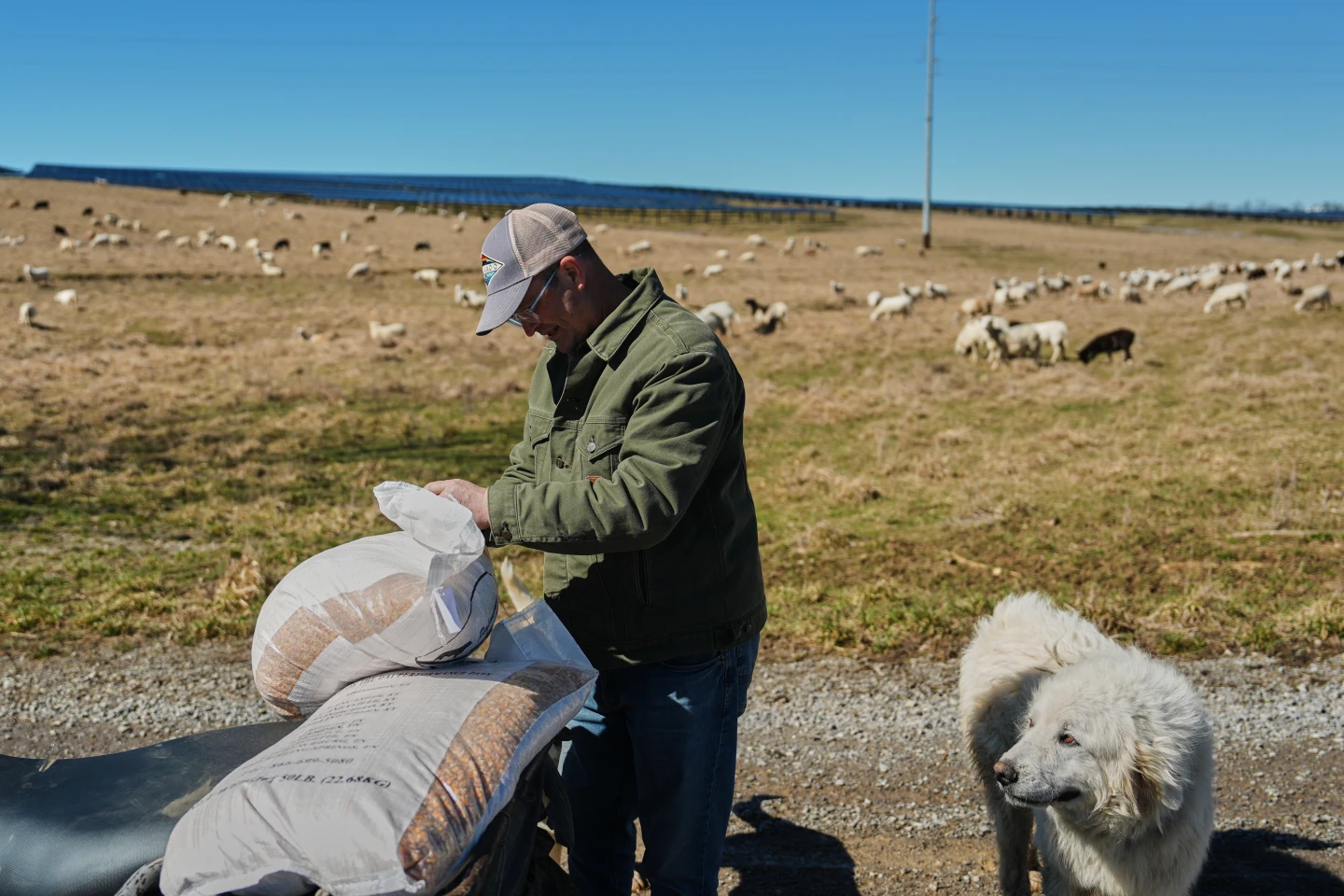
Bell has chosen to adapt by seeking new temporary barns on land owned by a commercial solar operation. This way, he can graze his sheep beneath the panels while tapping into cheaper power sources.
However, not every farmer has this option available. The pushback against renewable funding amid shifting political landscapes poses a significant threat to the viability of agricultural solar projects across the country.