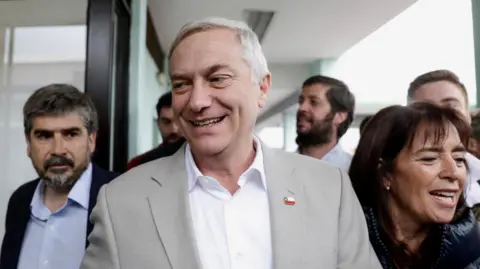
Chile has elected the far-right wing José Antonio Kast to be its next president, after an election campaign that was dominated by themes of security, immigration and crime.
Kast beat the governing left-wing coalition candidate Jeanette Jara decisively with more than 58% of the vote in his third attempt at running for president.
It marks the biggest shift to the right since the end of Chile's military dictatorship in 1990. Kast has openly praised Chile's former right-wing dictator, Augusto Pinochet.
In his first speech to supporters as president-elect, Kast stated: Chile will once again be free from crime, free from anguish, free from fear.
He vowed to change the lives of criminals and delinquents: We're going to look for them, find them, judge them and then we're going to lock them up, he added.
Supporters gathered in Santiago, draped in national flags, expressed jubilation over the results. Voter Augustina Trancoso remarked, I'm happy we can recover the country's security and patriotism. Many voters expressed hope that Kast's promises regarding security and immigration would be fulfilled.
Kast's platform included harsh measures against irregular immigration, maximum-security prisons, and policies for mass deportations. Drawing comparisons to Donald Trump, he proposed building a border wall with Peru and Bolivia.
While Chile remains one of the safest countries in South America, a rise in immigration and organized crime has sparked concerns among citizens. Critics of Kast argue that the perceived insecurity has been exaggerated.
In contrast, Kast's rival Jeannette Jara, representing the leftist coalition, conceded defeat, saying that democracy has spoken loud and clear and wishing Kast success.
As Kast prepares for his inauguration on 11 March 2026, his victory is being interpreted as part of a broader trend of rightward political shifts across Latin America.