In brief
A missile strike from Iran has hit the town of Dimona, located near Israel's nuclear research facility. This incident comes as a retaliatory act following alleged attacks on Iran's Natanz facility. While the International Atomic Energy Agency reported no damage or radiation increase at the nuclear site, the strike caused injuries to multiple civilians, and Israeli authorities are investigating the failure of defense systems. The situation continues to develop amid heightened military concerns.
An Iranian missile strike has hit the town of Dimona in southern Israel, near to a nuclear facility.
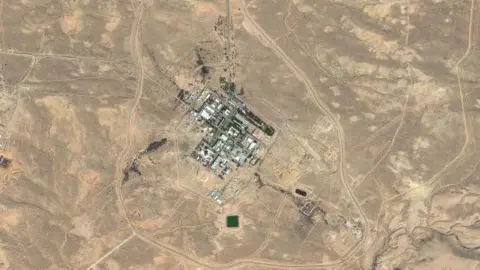
The International Atomic Energy Agency (IAEA) said it was not aware of any damage to the nuclear research facility located about eight miles (13km) outside Dimona.
Iranian state TV indicated that the strike was in response to a reported attack on Iran's Natanz nuclear facility earlier that same day. The IAEA confirmed that no increase in off-site radiation levels had been reported following the incident.
Rafael Grossi, the IAEA's director general, emphasized the importance of observing maximum military restraint, particularly in the vicinity of nuclear facilities.
In total, Israel's ambulance service reported treating approximately 40 individuals in Dimona following the strike, with 37 suffering mild injuries and a 10-year-old boy in serious condition. An additional 68 individuals required treatment from a separate strike in the nearby town of Arad, where they faced similar injuries.
Emergency medical technician Yakir Talkar described the scene in Arad as very severe, noting numerous injuries of varying severity.
Israeli authorities have begun an investigation into how the missiles bypassed air defense systems. Reports indicate that interceptors were launched but failed to intercept the incoming threats, resulting in successful strikes from ballistic missiles with significant payloads.
The Shimon Peres Negev Nuclear Research Center, often colloquially called the Dimona reactor, has long been suspected of housing Israel’s undeclared nuclear arsenal. It has been an open secret for decades that this facility has played a crucial role in nuclear weapon development, amidst Israel's public stance of ambiguity regarding its nuclear capabilities.
Iran's Atomic Energy Organization condemned the attack on Natanz, categorizing it as a violation of the Treaty on the Non-Proliferation of Nuclear Weapons, though it reassured that there was no danger to residents of the surrounding areas after reporting no leakage of radioactive materials.
Both Israel and the US have outlined the elimination of Iranian capabilities to develop nuclear weapons as a primary objective in current military strategies regarding Iran, especially following recent escalations in conflict.