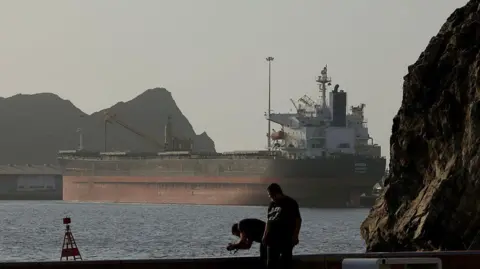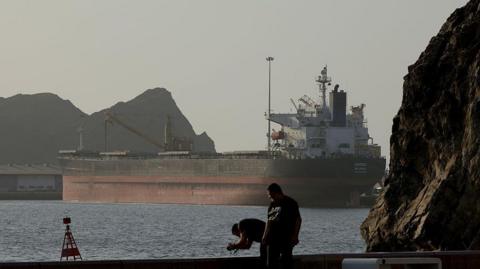
Never. That's the firm stance a senior Iranian politician has taken regarding the country's control of the vital Strait of Hormuz. Ebrahim Azizi, a former commander in Iran's Islamic Revolutionary Guards Corps (IRGC), asserted in an interview with the BBC that Iran's right to assert authority over the strait is non-negotiable. It's our inalienable right, he stated, emphasizing that Iran will dictate the terms for vessels wishing to pass through this strategic waterway.
Azizi revealed plans to submit a bill to the Iranian parliament aimed at formalizing this position based on national security and maritime safety principles. He noted that the armed forces would be responsible for enforcing this new law.
As the global community grows increasingly concerned about the potential for disruption to this economic artery, Azizi's comments signal a hardening of Iran's strategy in the face of international scrutiny and the implications of its military operations. He characterized control over the Strait of Hormuz as a pivotal asset that has gained significant importance amid ongoing military conflicts in the region.
Discourse around the strait now extends beyond mere navigation rights; Tehran perceives its control as leverage in diplomatic negotiations. Our first priority post-conflict is to restore deterrence, and control over the Strait is a key component of that strategy, explained Mohammad Eslami, a research fellow at the University of Tehran.
While Azizi's remarks resonate with the hardline stance prevalent in the current Iranian leadership, they have been met with criticism from regional neighbors who view Iran's actions as aggressive. UAE officials have described Iran's posture as hostile piracy, warning that persistence in restricting maritime navigation can set troubling precedents for international waters.
In a broader context, the geopolitical landscape surrounding the Strait of Hormuz is undergoing significant changes, with Iranian officials engaging in discussions about how to secure safe passage for vessels while maintaining stringent control. However, these efforts are complicated by rising tensions with neighboring countries, particularly after incidents of conflict during the ongoing armed hostilities.
As these dynamics unfold, the ramifications for global oil transport and regional security remain an enduring concern, suggesting that the issues regarding the Strait of Hormuz are far from resolution.
Azizi revealed plans to submit a bill to the Iranian parliament aimed at formalizing this position based on national security and maritime safety principles. He noted that the armed forces would be responsible for enforcing this new law.
As the global community grows increasingly concerned about the potential for disruption to this economic artery, Azizi's comments signal a hardening of Iran's strategy in the face of international scrutiny and the implications of its military operations. He characterized control over the Strait of Hormuz as a pivotal asset that has gained significant importance amid ongoing military conflicts in the region.
Discourse around the strait now extends beyond mere navigation rights; Tehran perceives its control as leverage in diplomatic negotiations. Our first priority post-conflict is to restore deterrence, and control over the Strait is a key component of that strategy, explained Mohammad Eslami, a research fellow at the University of Tehran.
While Azizi's remarks resonate with the hardline stance prevalent in the current Iranian leadership, they have been met with criticism from regional neighbors who view Iran's actions as aggressive. UAE officials have described Iran's posture as hostile piracy, warning that persistence in restricting maritime navigation can set troubling precedents for international waters.
In a broader context, the geopolitical landscape surrounding the Strait of Hormuz is undergoing significant changes, with Iranian officials engaging in discussions about how to secure safe passage for vessels while maintaining stringent control. However, these efforts are complicated by rising tensions with neighboring countries, particularly after incidents of conflict during the ongoing armed hostilities.
As these dynamics unfold, the ramifications for global oil transport and regional security remain an enduring concern, suggesting that the issues regarding the Strait of Hormuz are far from resolution.