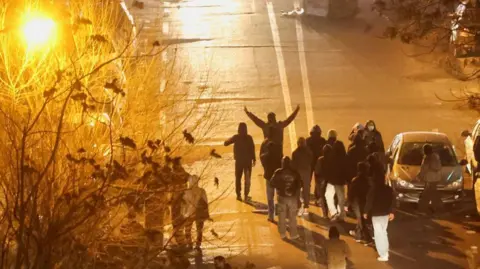
Iran's rulers are confronting their most serious challenge since their own 1979 revolution. They are now countering on an unprecedented scale - a ferocious security crackdown and near-total internet shutdown has been unleashed on a scale unseen in previous crises.
Some of the streets once engulfed by a roar of anger against the regime are now starting to go silent. On Friday it was extremely crowded - the crowd was unbelievable - and there was a lot of shooting. Then Saturday night it became much, much quieter, a resident of Tehran told BBC Persian.
This time, an internal upheaval is compounded by an external threat, with President Trump's repeated warnings of military action coming seven months after the U.S. carried out strikes on key nuclear facilities during a brief war between Iran and Israel, which left the regime weakened.
But Trump's approach has given Iran another card to play, as he claims Tehran has reached out for negotiations. However, Iran does not have a favorable position; the US has maximalist demands that conflict with the regime's fundamental beliefs.
Despite intense pressure, there are no indications that Iran's leaders intend to change their strategy. On the ground, reports of extensive casualties and government crackdowns are flowing out, further complicating an already dire situation.
As protests continue to engulf the nation, the government has termed those opposing it as terrorists and rioters, while legal responses have hardened, suggesting severe penalties for dissenters. Ultimately, the central question remains: can the regime withstand this unprecedented wave of discontent, or will it ultimately destabilize under the pressure of both internal frustrations and external threats?
Some of the streets once engulfed by a roar of anger against the regime are now starting to go silent. On Friday it was extremely crowded - the crowd was unbelievable - and there was a lot of shooting. Then Saturday night it became much, much quieter, a resident of Tehran told BBC Persian.
This time, an internal upheaval is compounded by an external threat, with President Trump's repeated warnings of military action coming seven months after the U.S. carried out strikes on key nuclear facilities during a brief war between Iran and Israel, which left the regime weakened.
But Trump's approach has given Iran another card to play, as he claims Tehran has reached out for negotiations. However, Iran does not have a favorable position; the US has maximalist demands that conflict with the regime's fundamental beliefs.
Despite intense pressure, there are no indications that Iran's leaders intend to change their strategy. On the ground, reports of extensive casualties and government crackdowns are flowing out, further complicating an already dire situation.
As protests continue to engulf the nation, the government has termed those opposing it as terrorists and rioters, while legal responses have hardened, suggesting severe penalties for dissenters. Ultimately, the central question remains: can the regime withstand this unprecedented wave of discontent, or will it ultimately destabilize under the pressure of both internal frustrations and external threats?