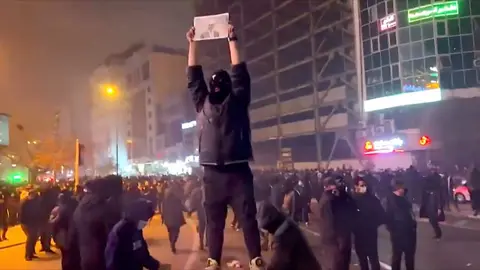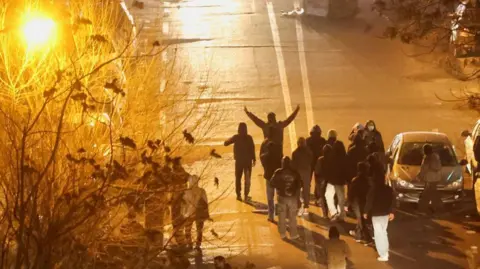
Iran's rulers are confronting their most serious challenge since their own 1979 revolution. The government is now countering protests on an unprecedented scale, responding with a ferocious security crackdown and near total internet shutdown unseen in previous crises. Some of the streets once filled with anger are now becoming eerily quiet, as one Tehran resident noted that after chaotic demonstrations, the situation considerably calmed down. With an internal upheaval compounded by external threats, particularly from President Trump's military warnings following past strikes on Iranian nuclear facilities, Iran's leadership faces a complex predicament.
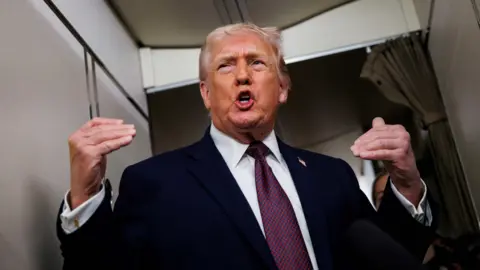
While Trump indicated that Iran has expressed interest in returning to negotiations, the Iranian regime seems unwilling to comply with U.S. demands for capitulation, specifically over nuclear enrichment policies that strike at the heart of their governing tenets. Amid this pressure, there are no indications that Iran's leaders are prepared to change course.
Vali Nasr from the Johns Hopkins School of Advanced International Studies highlighted that the Iranian government is likely to continue clamping down severely rather than seek constructive dialogue, which poses a challenge for the everyday lives of Iranians given the ongoing economic turmoil and sanctions crushing the country.
The wave of protests, initiated by frustrations over economic conditions, inflation and a currency crisis, escalated rapidly to demands for political change. Although the government offered multiple promises and allowances to quell unrest temporarily, the mounting violence and bloodshed are indicative of the crumbling social fabric within Iran.
Internally, the regime is reinforcing control, labeling protests as acts of terrorism, while prominent Iranian figures—like exiled crown prince Reza Pahlavi—call for international intervention. Yet, the opposition remains divided over the methods of pursuing change, emphasizing that any transition must stem from domestic resolve, not foreign influence.
As the protests show no signs of abating, the Iranian government faces the specter of collapse; yet echoes of historical patterns suggest such a moment of potential upheaval can lead to unpredictable and perilous outcomes.
While Trump indicated that Iran has expressed interest in returning to negotiations, the Iranian regime seems unwilling to comply with U.S. demands for capitulation, specifically over nuclear enrichment policies that strike at the heart of their governing tenets. Amid this pressure, there are no indications that Iran's leaders are prepared to change course.
Vali Nasr from the Johns Hopkins School of Advanced International Studies highlighted that the Iranian government is likely to continue clamping down severely rather than seek constructive dialogue, which poses a challenge for the everyday lives of Iranians given the ongoing economic turmoil and sanctions crushing the country.
The wave of protests, initiated by frustrations over economic conditions, inflation and a currency crisis, escalated rapidly to demands for political change. Although the government offered multiple promises and allowances to quell unrest temporarily, the mounting violence and bloodshed are indicative of the crumbling social fabric within Iran.
Internally, the regime is reinforcing control, labeling protests as acts of terrorism, while prominent Iranian figures—like exiled crown prince Reza Pahlavi—call for international intervention. Yet, the opposition remains divided over the methods of pursuing change, emphasizing that any transition must stem from domestic resolve, not foreign influence.
As the protests show no signs of abating, the Iranian government faces the specter of collapse; yet echoes of historical patterns suggest such a moment of potential upheaval can lead to unpredictable and perilous outcomes.