In brief
In response to inadequate disaster relief from the Indonesian government following catastrophic floods, residents in Aceh have taken to raising white flags as a call for international help. With over 1,000 lives lost and countless others displaced, community members express despair over the slow recovery efforts and demand immediate action from authorities. President Prabowo's administration faces criticism for refusing foreign assistance, prioritizing national sovereignty over urgent humanitarian needs.
For weeks now, angry and distressed residents in Indonesia's westernmost province have been raising white flags over the state's slow response to a series of deadly floods.
Triggered by a rare cyclone in November, the deluge killed more than 1,000 people and displaced hundreds of thousands across the island of Sumatra. In Aceh, the worst-hit province which accounted for nearly half of the deaths, many still do not have ready access to clean water, food, electricity and medical supplies.
In a sign of just how frustrating managing the crisis has become, the governor of North Aceh broke down publicly earlier this month.
Does the central government not know [what we're experiencing]? I don't understand, a tearful Ismail A Jalil said in front of cameras.
But President Prabowo Subianto has refused foreign aid, insisting the situation is under control. Indonesia is capable of overcoming this disaster, he told his cabinet last week. Prabowo has also so far ignored calls to declare it a national disaster, which would unlock emergency funds and streamline relief efforts.
Prabowo's administration has increasingly been criticised as reactive, disorganised and out of touch – adjectives that some analysts say have come to define his presidency, which he won in February 2024 on the back of populist pledges.
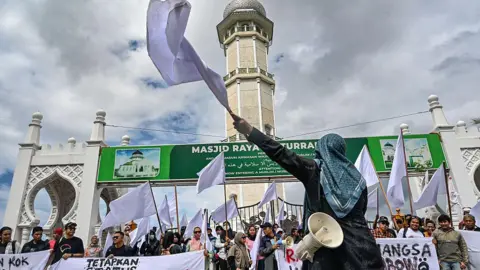
Last Thursday, dozens of protesters rallied in Aceh's capital, Banda Aceh, waving white flags and demanding that the central government opens the door to foreign aid.
The flags do not mean we are giving in. They are a distress signal to grab the attention of friends outside, to let them know the conditions in Aceh today are very bad, Husnul Khawatinnissa, who was at the rally, told the BBC.
Provincial authorities have reached out to the United Nations for support, with the Aceh governor declaring he welcomes help from anyone, anywhere.
For some in Aceh, the situation brings back painful memories of the 2004 Boxing Day tsunami, one of the worst natural disasters ever. Locals say they had only recently finished rebuilding their lives when disaster struck again in November.
Critics say the government has little understanding of the situation on the ground. Some also accuse Prabowo of being insensitive toward flood victims by promoting the expansion of palm oil plantations – environmental groups say the deforestation caused by that has also worsened the floods.
Rindu Majalina said she initially thought herself fortunate to have survived the floods, but it turns out the post-disaster situation is even worse. It has been very painful and miserable, she said. Everything has come to a complete standstill, from markets to schools to offices.