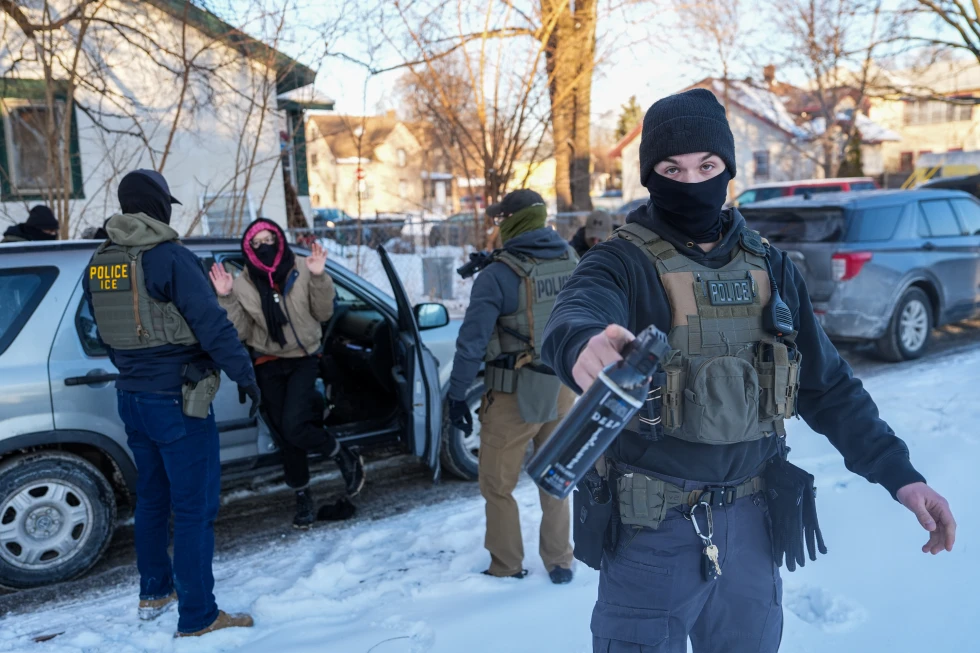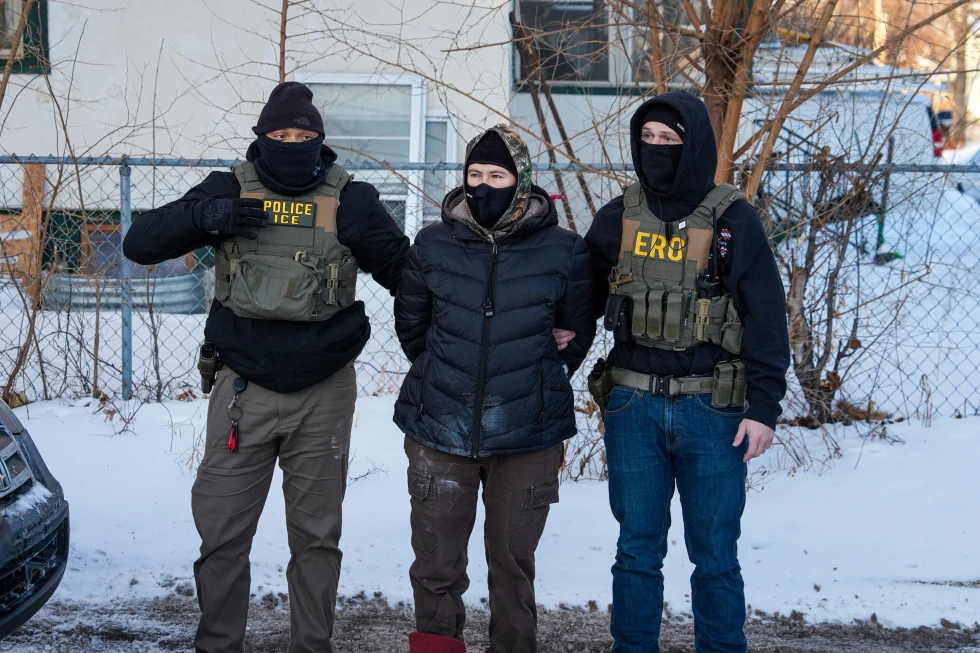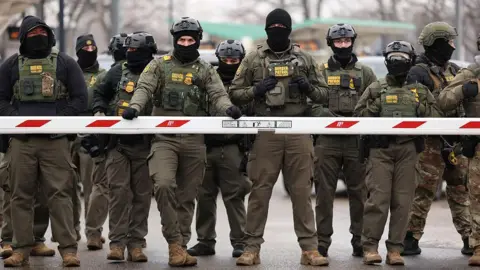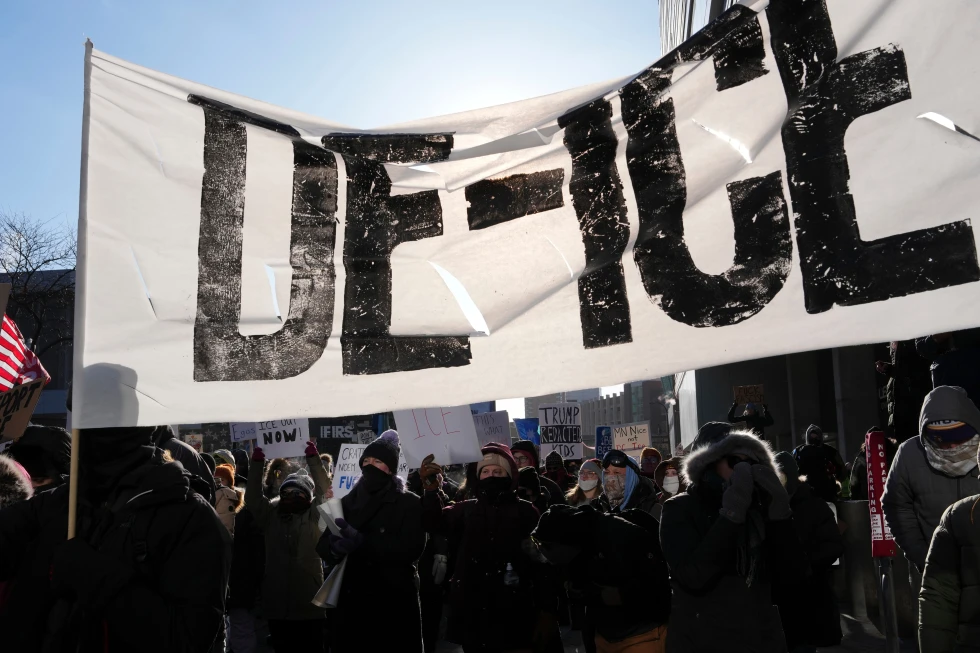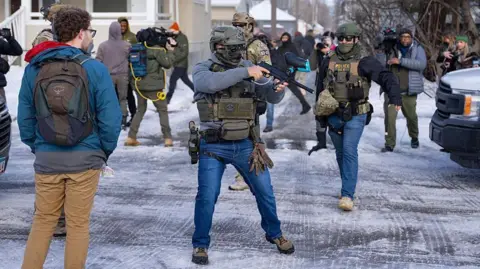
MINNEAPOLIS (AP) — A federal judge will hear arguments Monday on whether she should at least temporarily halt the immigration crackdown in Minnesota that has led to the fatal shootings of two individuals by government officers.
The state of Minnesota, alongside the cities of Minneapolis and St. Paul, filed a lawsuit against the Department of Homeland Security earlier this month, five days after Renee Good was shot by a member of the Immigration and Customs Enforcement team. The urgency of the situation has escalated following the shooting of another individual, Alex Pretti, by a Border Patrol officer this past Saturday.
The plaintiffs are seeking to restore the conditions that existed prior to a surge in federal immigration activity initiated by the Trump administration on December 1, known as Operation Metro Surge.
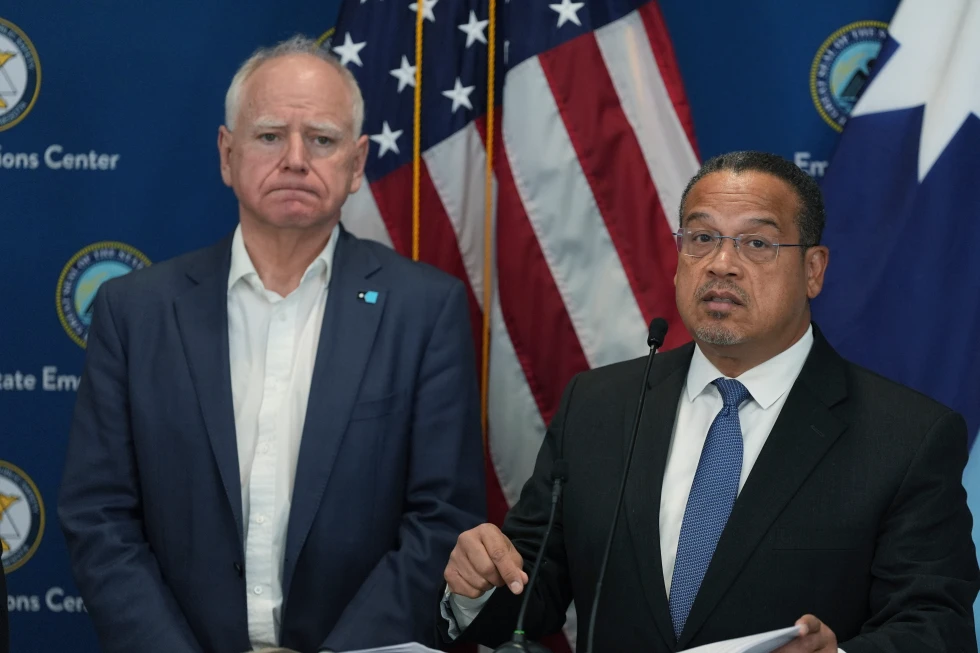
U.S. District Judge Kathleen Menendez is set to preside over the hearing, and Democratic Attorney General Keith Ellison plans to attend in person to represent Minnesota's interests.
The lawsuit requests the judge to order federal enforcement agencies to reduce their presence in Minnesota to pre-surge levels, while still permitting the enforcement of immigration laws under specific limitations.
Justice Department lawyers have denounced the lawsuit as legally frivolous and claim that Minnesota is trying to exert control over federal law enforcement activities. They have requested that the judge dismiss the case or stay any decision pending an expected appeal.
Ellison emphasized the necessity of this legal action, stating at a press conference that the federal government's actions represent a novel abuse of the Constitution,” and that unprecedented surges like this one are not something anyone can recall having occurred before.
As the case unfolds, it may set a precedent for other states considering challenges to similar federal immigration enforcement practices. Several attorneys general from 19 states and the District of Columbia, led by California, have submitted a friend-of-the-court brief in support of Minnesota's position.
Ellison noted the implications this case might have beyond Minnesota's borders, warning that if unaddressed, federal authorities might feel empowered to persist in unlawful actions across the United States.