In brief
Europe is in the throes of a severe summer heatwave that is now moving eastward, with forecasters warning of temperatures reaching 40 °C in western Germany and extreme weather alerts in the Czech Republic. French Prime Minister Sébastien Lecornu has lifted the country’s health alert to its highest level, citing deaths among elderly and young people as the heat intensifies. UN climate chief Simon Stiell called the scorching conditions a stark reminder of the climate crisis, urging a rapid shift to renewables. As cities brace for even hotter days, emergency services are stretched thin and infrastructure like nuclear plants are being forced offline.
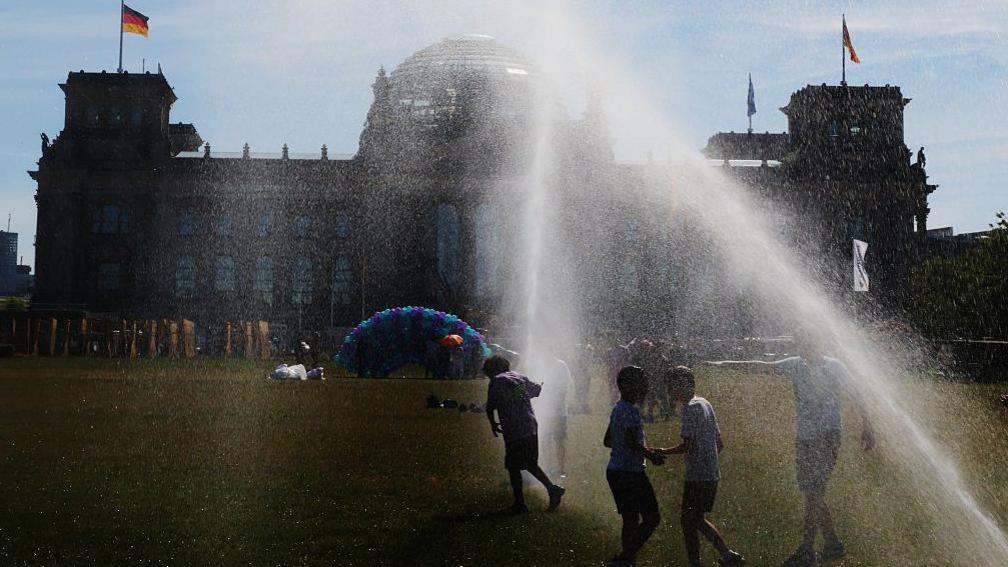
Heatwave spreads from the Atlantic to the Black Sea
Sweltering heat has dominated Spain, France and the UK for days, but the storm has now pushed east to Germany and the Czech Republic, with temperatures expected to reach 40 °C in parts of western and south‑western Germany on Thursday and Friday.
The Czech Republic has issued an extreme weather warning across most of the country, while German meteorologists warn that the heat will be historic and expect sustained highs across much of the continent.
France escalates health measures
Prime Minister Sébastien Lecornu announced last night that France’s health alert level had been raised to its highest tier. Health Minister Stéphanie Rist said authorities were now witnessing a rise in deaths among both the elderly and young people due to the extreme temperatures.
The move entitles the country to mobilise additional hospital staff and implement extra protective measures for vulnerable populations. Director of France’s Orsan health emergency plan, since moved to level three, will allow medical services to cope and avoid being overwhelmed.
Climate‑change links and global implications
Simon Stiell, United Nations climate chief, warned that Europe’s savage heatwave bears “the fingerprints of the climate crisis” and urged a “faster shift to renewables, protecting forests and boosting climate resilience.”
Data from the Copernicus Sentinel‑3 mission show the land‑surface temperatures across France spiking over 40 °C in the north‑west on Tuesday, with the average minimum temperature reaching a record 22 °C overnight. The satellite imagery highlights how heatwaves are intensifying, especially in northern and western Europe where temperatures are doubling the global average rise.
Local impacts and precautionary measures
In Paris, mayor Emmanuel Grégoire urged residents to reduce outdoor activity, citing a rise in mortality and a near‑mass turnout of joggers on the streets that evening.
Meanwhile, a 3‑year‑old died in a car in the Paris region, and there were reports of multiple deaths in Rennes and Carpentras linked to the heatwave, prompting emergency services to press for welfare checks of those not answering calls.
Hospitals and schools across France temporarily shut down, and three nuclear power plants were forced offline by the extreme temperatures – with a record 40.6 °C in Rennes on Monday and 41 °C the next day. Brenner municipalities, including the western seaboard of France, saw high winds up to 110 km/h with thunderstorms cancelling local festivals.
The heatwave is expected to peak in Italy on Monday, with over 40 °C forecasted for several northern regions, and the Met‑Office in the UK has extended red extreme temperature warnings until Friday evening for parts of London and south‑eastern England.
As the continent battles multi‑day scorching, transportation authorities in Germany, Czech Republic, Luxembourg, and the UK are offering free ticket cancellations and encouraging travelers to postpone trips to mitigate the risks of heat‑related accidents.