In brief
France hit its record‑breaking heatwave on 24 June, with temperatures hovering near 40 °C. Only a quarter of French homes have air‑conditioning, yet the extreme heat has spurred a surge in portable units and calls for widespread installation. The debate has become political, with Marine Le Pen demanding a national roll‑out and Green lawmakers reluctantly acknowledging the necessity for cooling in schools and hospitals. Critics fear that expanding cooling will increase energy demand and add to the climate‑change equation.
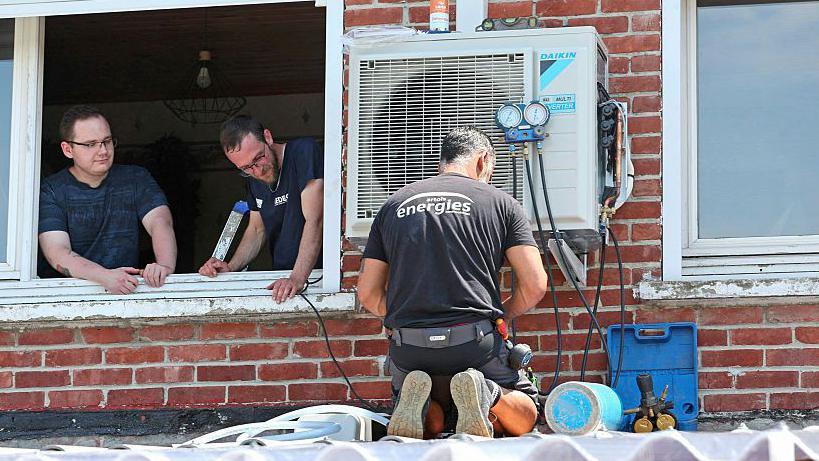
On 24 June, France endured its hottest day ever, with temperatures pushing close to 40 °C. The extreme heat forced a sudden wave of people to purchase portable air‑conditioning units, especially in schools and apartments that had no cooling systems.
Only about 25 % of French households currently have an air‑con unit, far lower than the roughly 50 % in Spain and Italy or the 90 % seen in the US and Japan. Hospitals and schools were also notably under‑equipped – a growing concern as many educational institutions shut down to avoid overheating.
The heat wave has reinvigorated political debate. Marine Le Pen of the National Rally has called for a government‑backed plan to equip all schools and hospitals with air‑conditioning, offering interest‑free loans worth €20 bn. At the same time, ecological coalition leader Marie Tondelier has admitted that air‑conditioning is inevitable for “certain places”, breaking away from the party’s prior anti‑climate‑change stance.
Opposition voices argue the move is opportunistic, noting the environmental impact of increased power use and refrigerant leaks. Critics also point to the urban heat effect, where the exhaust of cooling units can raise neighbourhood temperatures by two to three degrees.
The debate reflects France’s struggle to balance immediate public health needs against long‑term climate goals. With temperatures approaching danger levels, lawmakers on all sides are forced to confront the reality that significant cooling solutions will soon become a national priority.