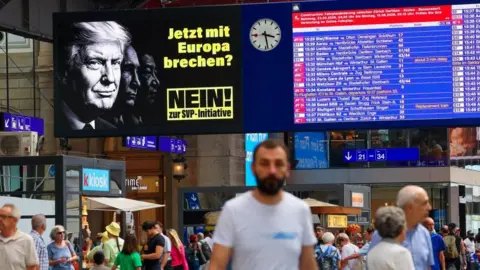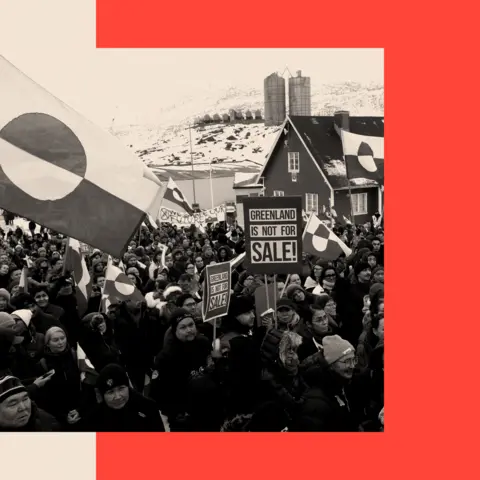
Something in Europe has snapped. Donald Trump doubled down again on his insistence that the U.S. 'has to have' Greenland for national security reasons, predicting that European leaders aren't 'gonna push back too much'. This confidence, however, is proving misplaced as Europe prepares to hold its ground at the upcoming World Economic Forum (WEF).
Greenland, a semi-autonomous territory of Denmark, is at the heart of a diplomatic standoff, with Trump suggesting that European nations must abandon Copenhagen in favor of U.S. control or face punitive tariffs on their exports. Such threats pose a significant risk to European economies, particularly those reliant on exports to the U.S. like Germany and Italy.
In response, Germany's finance minister recently declared, 'we will not allow ourselves to be blackmailed', reflecting the urgency among European leaders to address these aggressive tactics. A line has been crossed... Europe must prepare, said France's Finance Minister Roland Lescure, indicating a new level of seriousness in their approach that marks a departure from their previously more accommodating stance.
As the EU gears up for discussions with Trump, they are adopting a good cop, bad cop strategy, offering cooperation in Arctic security while hinting at imposing significant tariffs on American goods should the U.S. insist on its demands over Greenland.
The transatlantic relations, while strained, aren't irreparably broken. However, as Europe contemplates its next steps, the challenge lies in unifying their response against U.S. pressure while balancing internal political sensitivities amid domestic public opinion, which remains wary of escalating tensions with Washington.
Greenland, a semi-autonomous territory of Denmark, is at the heart of a diplomatic standoff, with Trump suggesting that European nations must abandon Copenhagen in favor of U.S. control or face punitive tariffs on their exports. Such threats pose a significant risk to European economies, particularly those reliant on exports to the U.S. like Germany and Italy.
In response, Germany's finance minister recently declared, 'we will not allow ourselves to be blackmailed', reflecting the urgency among European leaders to address these aggressive tactics. A line has been crossed... Europe must prepare, said France's Finance Minister Roland Lescure, indicating a new level of seriousness in their approach that marks a departure from their previously more accommodating stance.
As the EU gears up for discussions with Trump, they are adopting a good cop, bad cop strategy, offering cooperation in Arctic security while hinting at imposing significant tariffs on American goods should the U.S. insist on its demands over Greenland.
The transatlantic relations, while strained, aren't irreparably broken. However, as Europe contemplates its next steps, the challenge lies in unifying their response against U.S. pressure while balancing internal political sensitivities amid domestic public opinion, which remains wary of escalating tensions with Washington.