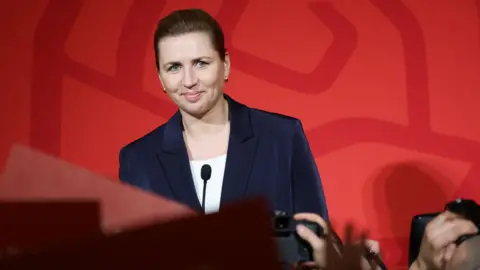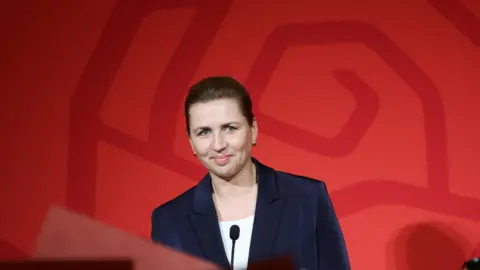
In what has become a significant political event for Denmark, the Social Democrats, under the leadership of Prime Minister Mette Frederiksen, have found themselves in a complex position following the recent general election. Although they secured the highest share of votes, 21.9%, the party could not attain the necessary majority, leaving them with only 38 out of 179 parliamentary seats.
Frederiksen acknowledged the disappointment in her party's performance, stating, 'I'm sorry that we did not get more votes. I had also hoped for a better result,' while expressing appreciation for her party's sustained popularity among Danes. Despite the challenging outcome, she still possesses the opportunity to govern by forming a coalition, as Denmark typically favors coalition governments.
The tightly contested election saw twelve political parties vying for power, with the total number of seats falling short of the required 90 for a parliamentary majority. The leftist 'red bloc' managed to gain a slight lead over the rightist 'blue bloc,' claiming 84 seats to 77, yet both groups face a significant hurdle in forming a governing coalition.
Frederiksen reiterated her commitment to the country's leadership, stating, 'I have been responsible for this wonderful country for almost 7 years... I am still ready to take on responsibility as Denmark's prime minister.' Nevertheless, the political landscape could shift dramatically, as the Moderates, led by former Prime Minister Lars Løkke Rasmussen, are now in a position to possibly influence coalition negotiations, emphasizing a desire for a centrist approach.
As both blocs seek alliances to achieve a majority, Frederiksen's administration may hinge on the creation of a coalition that could include traditional allies or new partners. Recent voter concerns regarding domestic issues such as the cost of living and environmental policies may further complicate negotiations in the days to come, as Frederiksen looks to navigate her way to a third consecutive term in office.
Frederiksen acknowledged the disappointment in her party's performance, stating, 'I'm sorry that we did not get more votes. I had also hoped for a better result,' while expressing appreciation for her party's sustained popularity among Danes. Despite the challenging outcome, she still possesses the opportunity to govern by forming a coalition, as Denmark typically favors coalition governments.
The tightly contested election saw twelve political parties vying for power, with the total number of seats falling short of the required 90 for a parliamentary majority. The leftist 'red bloc' managed to gain a slight lead over the rightist 'blue bloc,' claiming 84 seats to 77, yet both groups face a significant hurdle in forming a governing coalition.
Frederiksen reiterated her commitment to the country's leadership, stating, 'I have been responsible for this wonderful country for almost 7 years... I am still ready to take on responsibility as Denmark's prime minister.' Nevertheless, the political landscape could shift dramatically, as the Moderates, led by former Prime Minister Lars Løkke Rasmussen, are now in a position to possibly influence coalition negotiations, emphasizing a desire for a centrist approach.
As both blocs seek alliances to achieve a majority, Frederiksen's administration may hinge on the creation of a coalition that could include traditional allies or new partners. Recent voter concerns regarding domestic issues such as the cost of living and environmental policies may further complicate negotiations in the days to come, as Frederiksen looks to navigate her way to a third consecutive term in office.