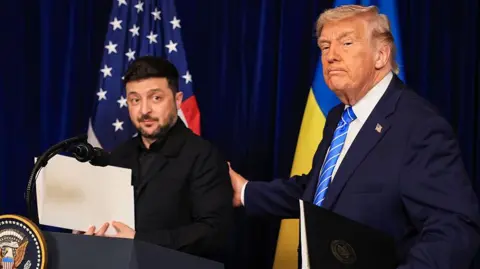
Russia, the US, and Ukraine agree that a deal on ending almost four years of full-scale war is edging closer but, in the words of President Donald Trump, one or two very thorny, very tough issues remain.
Two of the trickiest issues in Washington's 20-point plan involve territory and the fate of Europe's biggest nuclear plant, which is currently occupied by Russia.
The Kremlin agrees with Trump that negotiations are at a final stage, and Zelensky's next step is to meet European leaders in France on 6 January, but any one of the sticking points could jeopardize a deal.
Fate of Ukraine's Industrial Heartland Coveted by Putin
Vladimir Putin has not budged from his demand for the entire Donbas region, a key industrial area of Ukraine, despite Zelensky's attempts at compromise.
Putin seeks control of the remaining fortress cities of Sloviansk and Kramatorsk, which Zelensky argues are vital to Ukrainian sovereignty, stating, We can't just withdraw, it's out of our law.\
Zelensky proposed that both sides withdraw to create a demilitarized zone policed by international forces, but it's unclear if Putin would accept such terms.
Ukraine's Nuclear Power Plant in Russian Hands
Since March 2022, Russia has operated the Zaporizhzhia nuclear plant, which is not generating power. Ukraine has condemned any Russian intention to control the facility's future, arguing it should be demilitarized and internationally managed.
Lack of Mutual Trust Limits Progress
Despite positive rhetoric, trust is minimal. Both sides have accused each other of aggressive intent, complicating negotiations. Zelensky has indicated that without mutual confidence, substantial progress on these key issues is unlikely.
Other Sticking Points that Could Derail the Deal
Security guarantees for Ukraine and its aspirations to join NATO are contentious topics, along with financial reparations. Financial losses are estimated at $800 billion, which leads to disputes over Russian contributions to reparations.
Potential for a Referendum
Zelensky insists that any decisions regarding Donbas's fate require public approval, suggesting a referendum could be required to validate any peace agreement—posing another challenge for negotiators.