In brief
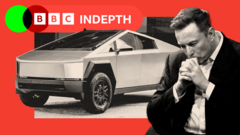
Tesla, once a symbol of electric vehicle innovation, finds itself in tumultuous waters as CEO Elon Musk's controversial actions provoke backlash against the brand. Recent protests at Tesla dealerships worldwide highlight growing public dissent, particularly linked to Musk’s political involvement and management strategies. Despite its top-selling Model Y and an expanding global presence, Tesla's market performance has faltered amid increased competition and consumer discontent.
The bright pearl-white Tesla Model Y has been a beloved family car for Ben Kilbey for three years, but now, he insists that it must be sold due to his disapproval of CEO Elon Musk's recent conduct. Kilbey, who runs a UK communications firm focused on sustainable businesses, expresses dismay at Musk's management style, especially after his controversial decision to dismiss US government employees. “I don't like belittlement,” Kilbey states, reflecting a sentiment that appears to resonate with a growing segment of Tesla's customer base. This discontent intensified following Musk's appointment as head of the Department for Government Efficiency (DOGE), responsible for reducing federal government spending. Concurrently, he has become politically active in Europe by appearing at rallies for far-right parties and attacking British politicians. The result has been a series of protests at Tesla locations not just in the US but globally, with incidents of vandalism and even violence against properties associated with Tesla.Sales data reveals the effect of this backlash. Although the Model Y was the best-selling car worldwide last year, overall Tesla sales dropped for the first time in over a decade, falling from 1.81 million to 1.79 million vehicles. This decline raises alarms for a brand that has historically prided itself on continuous growth.Despite retaining its status as the leading electric vehicle manufacturer, the decline in sales, particularly in Europe where registrations dropped by 45% in January, has raised concerns among analysts. A research note from USB predicted a 5% reduction in worldwide sales this year, contradicting market optimism about growth. Analysts at Morning Consult Intelligence noted that Musk's controversial public persona has negatively impacted Tesla's brand image, especially in Europe and Canada.Beyond reputation, challenges stem from an aging product lineup. The marquee Model S has been available since 2012, with recent models also starting to look dated. With competition intensifying from both traditional car manufacturers and a slew of innovative electric vehicle companies from China, Tesla must adapt rapidly to remain competitive. Companies like BYD are proving formidable with their low-cost, high-performance EVs.Apart from the vehicle lineup, Tesla's ambitious vision of driverless "robotaxis" faces skepticism. Musk's claims of imminent autonomous vehicle availability have been met with doubt, as promised timelines consistently slip further into the future. The weight of these aspirations is compounded by his divided focus across multiple ventures, including SpaceX and social media platform X, raising concerns about his direct involvement in Tesla’s operations.Investor sentiment towards Musk remains mixed. While Tesla shares have seen significant fluctuations, they still retain a valuation considerably higher than traditional automakers. Some investors are advocating for a change in leadership, with calls for Musk to take a step back in favor of a new CEO familiar with the automotive industry’s dynamics.Experts argue that a fresh perspective at the top could help Tesla address its mounting challenges, including the fallout from Musk's controversial leadership style. "A new CEO for Tesla would... allow a dedicated leader to focus entirely on the job at hand," suggests Matthias Schmidt of Schmidt Automotive Research.As Tesla navigates these complex challenges amidst a shifting landscape of electric vehicle perception and competition, the sustainability of Musk’s leadership at the helm remains in question.