In brief
BYD has claimed the title of the world's largest electric vehicle seller, with 2.25 million units sold in 2025, outpacing Tesla's 1.64 million. Tesla's sales have declined for the second consecutive year amid rising competition and changing market dynamics. Despite BYD's success, Tesla remains the more profitable entity, facing challenges including a subsidy repeal in the U.S.
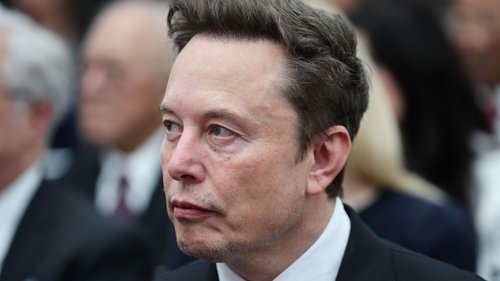
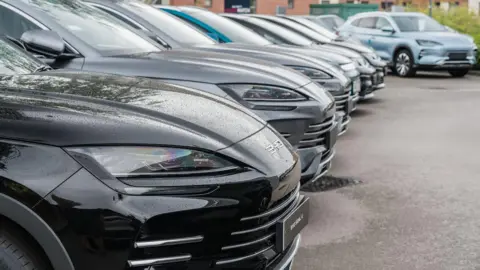
China's BYD has overtaken Elon Musk's Tesla as the world's biggest seller of electric vehicles (EVs), marking the first time it has outpaced its American rival in annual sales. Tesla car sales dropped by nearly 9% in 2025 to 1.64 million vehicles sold worldwide, the carmaker said on Friday - its second consecutive year of falling car deliveries.Those figures placed Tesla behind BYD, which said on Thursday that sales of its battery-powered cars rose last year by almost 28% to more than 2.25 million. The US firm has faced a tough year with a mixed reception to new offerings, unease over Musk's political activities, and intensifying competition from Chinese rivals.Tesla's car sales fell 16% during the last three months of 2025. The drop was partly due to the repeal of a government subsidy that had helped knock as much as $7,500 (£5,570) off the price of certain battery electric, plug-in hybrid or fuel cell vehicles.Wall Street analysts have recently lowered their Tesla sales estimates for 2026, signaling an increasingly gloomy outlook. Chinese firms such as Geely, MG, and BYD - now the country's largest electric car company - have put pressure on Western rivals by pricing their vehicles below established brands.In October, Tesla responded by launching lower-priced versions of its two best-selling models in the US in a bid to boost sales. Musk, who is already the world's richest man, is tasked with significantly boosting Tesla's sales and stock market value over the next decade to secure a record-breaking pay package. This deal, which was approved by shareholders in November, could see him getting as much as $1tn (£740bn).As part of the agreement, Musk also has to sell a million humanoid robots over the next ten years. Tesla has invested heavily in its 'Optimus' product and self-driving 'Robotaxis'. Musk's commitments also include interests in social media platform X, the rocket firm SpaceX, and the Boring Company.Despite BYD's rise in recent years, its sales growth slowed in 2025 to the weakest rate in five years. Yet, BYD remains a global EV powerhouse as its prices often undercut rival carmakers. The Shenzhen-based company's rapid expansion - especially in Latin America, South East Asia, and parts of Europe - comes despite many countries imposing steep tariffs on Chinese EVs.In October, BYD said the UK had become its biggest market outside China, with sales in Britain surging by 880% in the year to the end of September, driven by strong demand for the plug-in hybrid version of its Seal U sports utility vehicle (SUV).