In brief
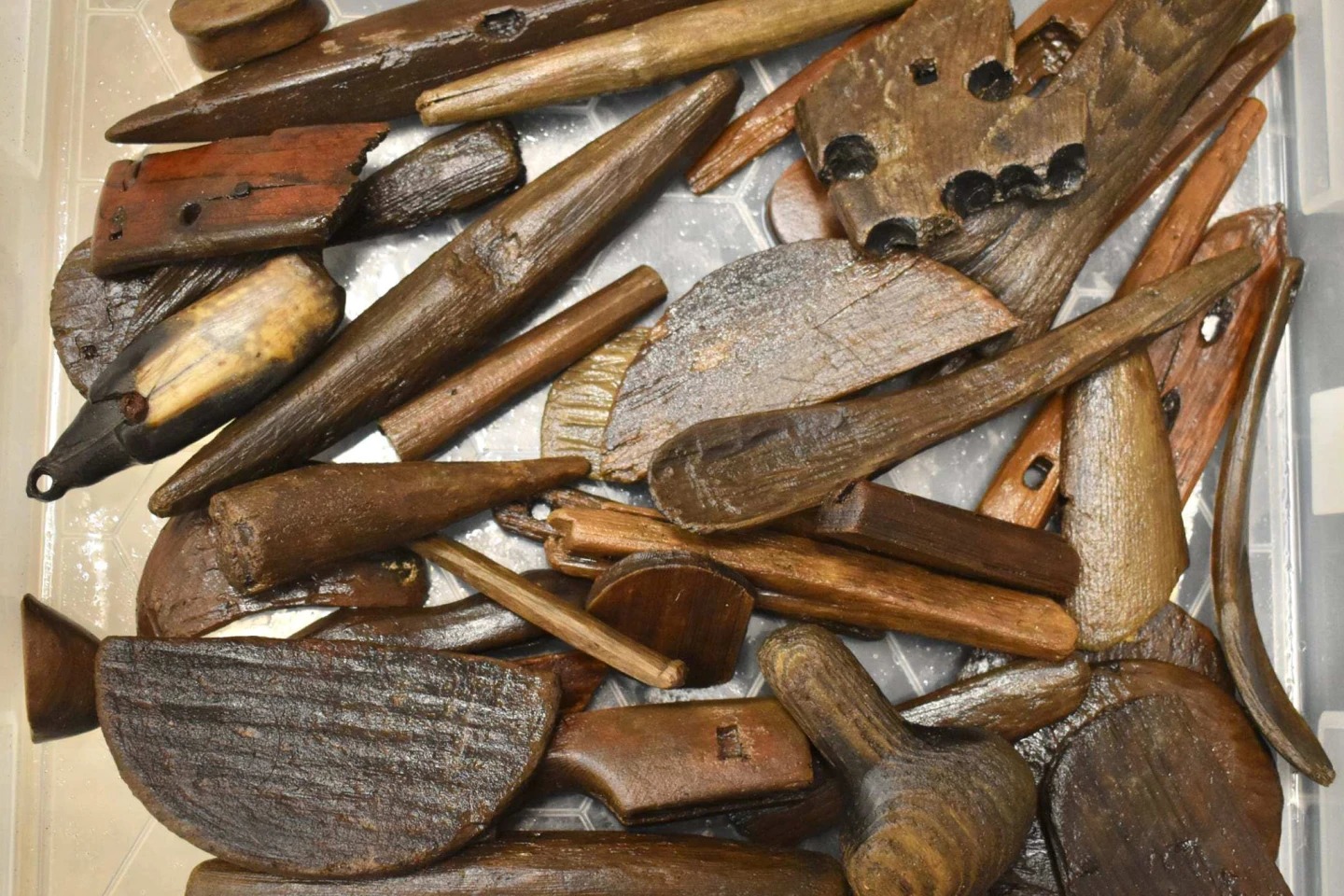
Following the impact of Typhoon Halong on October 11-12, Quinhagak, Alaska, has seen significant losses to its archaeological heritage. A storm surge eroded the shoreline, exposing and displacing thousands of artifacts from the ancient Yup’ik site, including wooden masks and tools. Archaeologists report that about 1,000 pieces were recovered but estimate up to 100,000 artifacts may still be scattered along the coast. The damage poses a threat not only to the rich cultural history of the Yup’ik people but also to the community’s infrastructure due to coastal erosion.
JUNEAU, Alaska (AP) — The impact of Typhoon Halong has been felt deeply in the Yup’ik community of Quinhagak, where a storm surge destroyed portions of a crucial archaeological site. This site, long preserved in permafrost, was home to a wealth of cultural artifacts that offered insight into Yup’ik life before European contact. Notably, about 1,000 historical pieces were salvaged after the storm wreaked havoc on October 11-12, but estimates suggest there may be as many as 100,000 artifacts washed away along the shoreline. Rick Knecht, an archaeologist with extensive experience in the Nunalleq project, described this event as a substantial loss, likening the disturbance of the archaeological site to trying to read a book with missing pages. While Quinhagak experienced lower destruction than its neighboring areas, the community faces the dual threats of climate change, with increasing coastal erosion and a history of infrastructure damage caused by such natural disasters. The excavation project at Nunalleq began in 2007, prompted by newly discovered artifacts on the beach. Sadly, the remnants of this rich history, once hidden beneath the permafrost, are at risk as summer storms and warming temperatures expose them further. As the temperatures drop and ice settles in, immediate recovery efforts have been stalled, leaving archaeologists hopeful, yet anxious about the fate of these invaluable pieces of Native Alaskan heritage.