In brief
The world loses a towering figure when former Federal Reserve chair Alan Greenspan dies at 100. A centenarian who guided U.S. monetary policy from 1987 to 2006, Greenspan is credited with a record of economic stability but also blamed for the dot‑com bubble and the 2008 financial crisis. His legacy is a complex blend of praise for his analytical rigor and criticism for his laissez‑faire stance. The Federal Reserve and the U.S. government honored him with a statement of gratitude and noted his role in shaping modern financial policy.
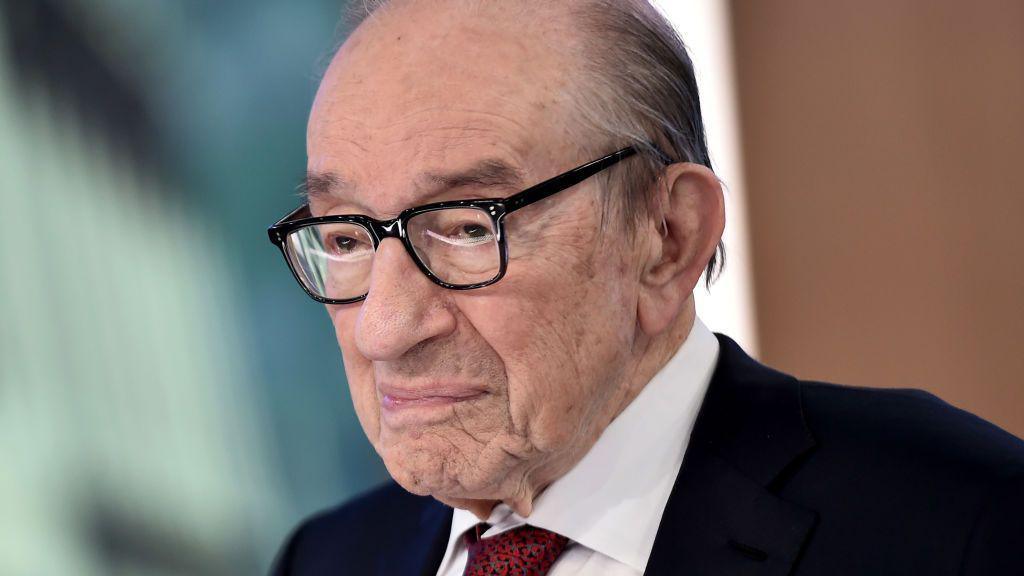
Former Federal Reserve chair Alan Greenspan, who steered the U.S. economy for nearly two decades, died on 22 June 2026 at age 100.
The former chairman, remembered for his analytical rigor, was brought to the public eye as a shadowy figure—“God in the machine” to the money market—who met every crisis with confidence and inexpensive credit. His tenure from 1987 to 2006 was marked by a record stretch of growth, yet critics argue his low‑interest‑rate policy contributed to the dot‑com bubble and the sub‑prime mortgage crash.
Asked by NBC’s Andrea Mitchell, Greenspan’s wife reported his passing was due to complications from Parkinson’s disease. In a statement, Mitchell praised him as a “giant of a man who helped shape the U.S. economy for decades under presidents of both parties” and noted he was “once honest in acknowledging his mistakes.”
The Federal Reserve honored him, saying his “policies and economic thinking left a lasting mark on the institution, on the broader field of economics, and on the country.” The central bank highlighted that he brought “rigorous analytical discipline to monetary policymaking” and that his legacy continues through the economists he mentored.
Born in 1926 in New York, Greenspan studied clarinet at Juilliard before turning to economics at NYU. He moved from bench‑work at JP Morgan to influence in the White House, advising presidents Nixon, Ford, Reagan and Clinton. His philosophy of self‑interested markets—shaped in part by discussions with Ayn Rand—led him to champion the idea that the economy performs best when individuals pursue their own welfare.
During crises he used tools such as “quantitative easing” to keep markets stable, famously calming the October 1987 crash and later easing during the 2008 global financial crisis. Yet, after the 2008 crash, he admitted to placing too much faith in the self‑regulation of banks, a stance he later described as “flawed.”
Beyond policy, Greenspan’s personal life included brief marriages, a relationship with Barbara Walters, and a marriage to reporter Andrea Mitchell in 1997. He celebrated his centenary in March 2026, remained a public voice on economic issues, and criticized President Trump’s administration as well as Brexit, stating it was the “worst outcome.”
Alan Greenspan’s death marks the end of an era for the United States. His tenure saw the longest sustained period of growth, but also left a legacy that continues to spark debate over the role of regulation in the financial system.