In brief
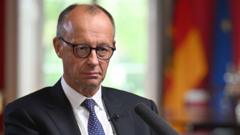
German Chancellor Friedrich Merz speaks with the BBC, addressing U.S. criticisms of Europe's defense spending and committing to increased military investment. He emphasizes strengthening UK-German relations through a new treaty that addresses security and youth exchanges amid ongoing global tensions.
German Chancellor Friedrich Merz has openly accepted U.S. criticisms regarding Europe's inadequate defense spending, acknowledging that the continent has been "free-riders" in the past. In a recent interview with the BBC, Merz stated, "We know we have to do more on our own... they're asking us to do more, and we are doing more." During his visit to the UK, Merz aimed to enhance defense ties as part of a landmark friendship treaty, which also focuses on combating irregular migration and fostering youth exchanges. The ongoing Russian invasion of Ukraine has significantly shaped Merz's early governance, along with U.S. President Donald Trump’s expressed concerns about imposing tariffs on European exports starting August 1.Merz reflected positively on his relationship with Trump, mentioning they communicate weekly to coordinate efforts on matters such as the Ukraine conflict and trade tariffs. While a strong advocate for Ukraine, Merz had also made a symbolic visit to Kyiv shortly after his victory in the February elections.Addressing the threats posed by Russia, Merz contends that the situation transcends Ukraine, endangering the political stability of Europe. During election campaigns, the influence of U.S. politics on European defense was underscored, particularly following remarks by U.S. Vice-President JD Vance at the Munich Security Conference, emphasizing the need for Europeans to assume greater responsibility for their security.Merz has made significant changes, including modifications to the German constitution to increase defense expenditure, underscoring the need for a stronger military. He reiterated this in his BBC interview, stating, “We are not strong enough, our army is not strong enough.”In collaboration with the UK and France, Germany is advancing a triangular alliance—dubbed the E3—aimed at addressing not just security but also economic development. Merz mentioned forming close ties with UK Prime Minister Keir Starmer and French President Emmanuel Macron, with the latter visiting Berlin soon.A recent treaty signed by Merz and Starmer at the Victoria and Albert Museum reinforces mutual commitment to defense, complementing previous agreements dating back to the UK’s EU membership. Additionally, the two nations plan to enhance joint military technology efforts, including producing advanced missile systems.Despite positive interactions with the U.S., Merz remains cognizant of the shifting global priorities, suggesting greater European self-reliance is increasingly vital. He criticized the potential U.S. tariffs that threaten Germany's export industry but remained optimistic about negotiations with the U.S. President.Furthermore, the treaty includes efforts to criminalize the storage of boats used for illegal Channel crossings, showcasing a commitment to addressing pressing issues like migrant smuggling. With aspirations for enhanced student exchanges, Merz expressed hopes that the upcoming treaty benefits will resonate particularly with the youth, fostering long-term relationships between Germany and the UK.