In brief
Recent research has uncovered that, even after 5,000 years, mummies have retained delightful scents that could enhance museum experiences.
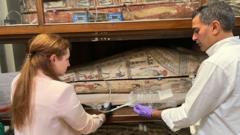
In a fascinating revelation, researchers studying nine mummies from ancient Egypt have discovered that these long-preserved bodies still emit pleasant aromas, described as "woody," "spicy," and "sweet." Despite spending millennia in sarcophagi, the findings suggest more about the ancient Egyptian mummification process than just the physical preservation of the corpses.Cecilia Bembibre, one of the lead researchers, shared the excitement on BBC Radio 4's Today programme, stating that the goal is to reconstruct and present these smells in the Egyptian Museum in Cairo. The study emphasizes that during mummification, Egyptians intentionally used fragrant oils, waxes, and balms to prepare the deceased for their journey into the afterlife. Contrary to popular culture depictions, which often associate mummies with foul odors and decay, the study's results revealed a pleasant discovery.Published in the Journal of the American Chemical Society, the research involved a delicate and non-invasive method to capture the scents from within the sarcophagi using a tiny tube, without disturbing the mummies themselves. Dr. Bembibre noted the necessity for “non-destructive” techniques in heritage science, underscoring advances in the field.The project aims to transform the museum experience, allowing visitors to engage with ancient Egyptian culture through olfactory senses. Ally Louks, an expert on the significance of scent in history from the University of Cambridge, praised the project as an innovative method of historical communication that creates a deep emotional connection.Furthermore, the study has implications extending beyond aesthetic appreciation. The scientific insights obtained through gas chromatography indicated the presence of animal fats from the embalming process, serving as indicators of mummified bodies' condition. The findings may empower conservators to make informed decisions regarding the storage and preservation of these artifacts for future generations.With mummies now described as bearers of nostalgic scent rather than dreadful decay, the research opens new doors to understanding ancient Egyptian social practices and rituals, as well as enhancing conservation methods in museum collections. Dr. Strlič from the research team expressed optimism about expanding these sensory-based approaches to other museum artifacts, thereby enriching public understanding and engagement with history.