During a high-stakes meeting held in the picturesque La Malbaie, Quebec, foreign ministers from Canada, the U.S., U.K., France, Germany, Italy, Japan, and the European Union managed to find common ground despite significant tensions stemming from President Trump's recent tariff policies and his controversial stance on Ukraine. Their discussions culminated in a communiqué that sought to downplay divergences and expressed commitment to Ukraine's sovereignty, also touching on the political aspirations of both Israelis and Palestinians, although avoiding explicit endorsement of a two-state solution.
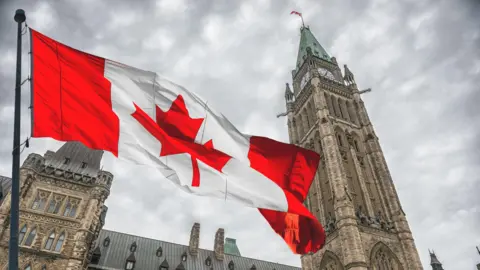
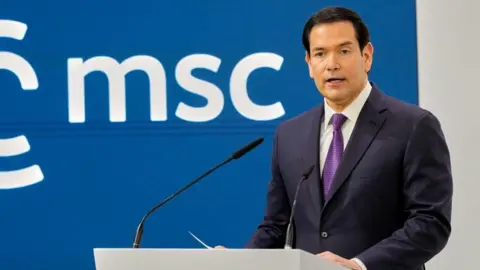
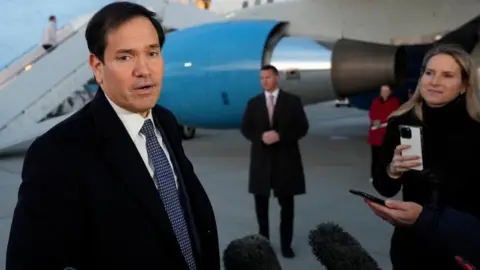
Secretary of State Marco Rubio, representing the U.S., faced particularly challenging dynamics with Canadian officials, including Foreign Minister Mélanie Joly. The Canadian government has been critical of remarks made by President Trump suggesting that Canada could be assimilated into the U.S. as "the 51st state." Joly's firm rebuttal of this rhetoric during the ministers' meeting, asserting Canada’s sovereignty is non-negotiable, highlighted the sensitive atmosphere surrounding the talks.
Despite these diplomatic tensions, achieving a unified narrative on Ukraine was seen as a constructive outcome for the G7 ministers, who are navigating a landscape of shifting alliances and conflicting national interests. The aftereffects of the meeting signal the need for continued dialogue as nations grapple with complex geopolitical challenges in an increasingly polarized world.