In brief
Researchers have inadvertently revealed the vast Mayan city of Valeriana, nestled in the jungles of Campeche, Mexico, utilizing Lidar technology. This discovery underscores the sophistication of ancient civilizations in tropical regions and poses new questions regarding their resilience to environmental changes.
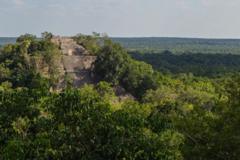
In a stunning archaeological revelation, a lost Mayan city named Valeriana has been discovered in the jungles of Campeche, Mexico, long-hidden beneath a dense canopy. The city features impressive structures, including pyramids, sports fields, and causeways, and is believed to have been home to 30,000 to 50,000 inhabitants during its peak from 750 to 850 AD, surpassing the current population of the area.The find comes as a result of a chance encounter by researcher Luke Auld-Thomas from Tulane University, who stumbled upon a Lidar survey online while searching for environmental data. This advanced radar technology allowed him to map subsurface structures, unveiling the city's extensive layout that includes two major centers approximately 2 kilometers apart, adorned with plazas and temple pyramids.Named after a nearby lagoon, Valeriana has been noted for its resemblance to Calakmul, one of the largest known Mayan urban centers located nearby. The discovery challenges preconceived notions that tropical areas were devoid of complex civilizations, highlighting the vibrant cultures that thrived in these environments.Archaeologists speculate that climate change may have played a significant role in the city's decline, reflecting a pattern of population density that could not adapt to prolonged drought conditions. The site, rich in historical relics like jade masks, and evidence of organized sports and ceremonial activities, signals a sophisticated societal structure.Pioneering Lidar technology has transformed archaeological methods in dense regions, revealing ten times the area previously surveyed using conventional techniques. This advancement hints at the possibility of even more undiscovered sites awaiting exploration, though challenges remain due to the sheer number of new findings.Professor Elizabeth Graham, from University College London, emphasizes that these discoveries showcase how ancient Mayans lived in complex communities rather than isolated settlements, indicating a level of societal development previously underestimated. The research, published in the journal Antiquity, suggests that as many as 6,764 buildings might have comprised this lively city, rich in culture and innovation.As archaeologists continue to explore Valeriana, they aim to decode the vibrant history of this remarkable city, which has been hidden in plain sight for centuries.